
Parashat Vayetse, Genesis 28:10–32:2
Rabbi Isaac S. Roussel, Chavurat Zera Avraham, Ann Arbor, Michigan
Parashat Vayetse is filled with difficult and painful relationships. Yaakov flees from his brother Esav, whose anger has driven him from home. He then encounters deception and manipulation at the hands of his father-in-law, Lavan. Meanwhile, Rachel and Leah struggle with jealousy, rivalry, and the pain of sharing the same husband. Throughout these stories, we encounter people who wound one another, sometimes deliberately and sometimes through their own insecurities and desires. They remind us that even within families, relationships can be extraordinarily difficult.
The question is not simply how we endure such relationships, but what we allow them to make of us.
I found myself reflecting on this question while revisiting a book that profoundly impacted me many years ago: Spiritual Passages: The Psychology of Spiritual Development, by Fr. Benedict Groeschel.
Groeschel describes different ways people seek and encounter God. Some are drawn particularly to unity, others to truth, beauty, or goodness. His descriptions reminded me somewhat of the Myers-Briggs personality types. As someone who identifies as an NF (Intuitive-Feeling), I have always been particularly drawn to goodness. Groeschel describes seekers of goodness as cheerful, compassionate, and gregarious. They tend to see the good in others, trust people, and believe kindness will generally be met with kindness.
But there is a problem.
We live in a wounded world, and wounded people sometimes wound others.
Groeschel observes that seekers of goodness can find themselves manipulated, deceived, and betrayed. Their openness and compassion, which ought to be strengths, can leave them particularly vulnerable.
As I read these words, I felt as though he were describing my life. I often say that I feel like a happy-go-lucky puppy, bounding through life with my tail wagging, delighted to meet everyone I encounter. And then, suddenly, someone kicks me. I stand there bewildered. Why would someone do that? What did I do wrong?
Perhaps you know the feeling.
Over the past several years, I have experienced more than a few of those kicks. I have worked in a toxic environment, been castigated by friends and family over political and social convictions, and encountered hostility from people who disagreed with my religious beliefs.
Such experiences present us with a spiritual challenge. Groeschel warns that seekers of goodness can fall into what he calls stunned disillusionment. Having expected goodness from the world, they are devastated when they encounter cruelty. They may become cynical, bitter, or withdrawn, retreating into a safer world where no one can hurt them again.
I understand that temptation. But I have become increasingly convinced that there is another way.
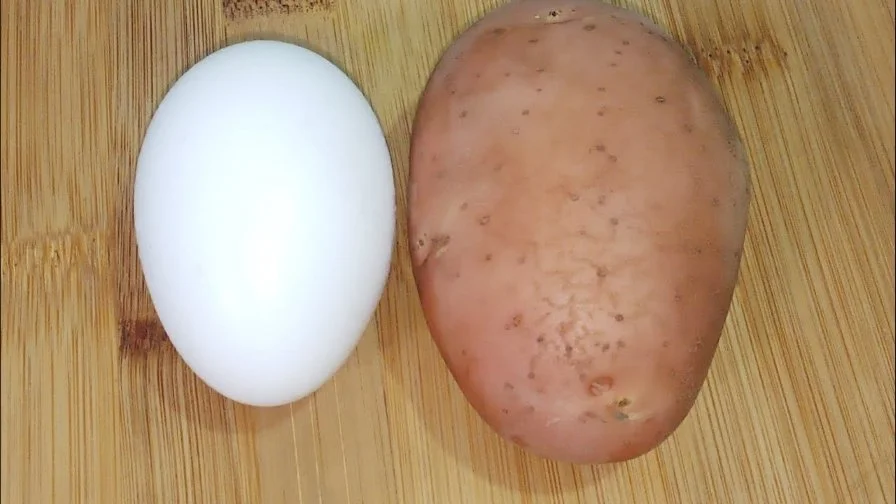
Not long ago, I encountered a simple illustration that stayed with me. Place a potato and an egg into boiling water. Both experience the same heat and endure the same harsh environment. Yet they respond differently. The egg, initially soft inside, becomes hard. The potato, initially firm, becomes soft.
Will we, like eggs, harden and become bitter, suspicious, defensive, and increasingly unwilling to trust? Or will we, like potatoes, soften and emerge more compassionate, more merciful, and more understanding of the suffering of others? I have made a decision.
I want to be a potato.
That may sound ridiculous as a spiritual aspiration, but I mean it seriously. I do not want the cruelty of others to make me cruel. I do not want someone else's bitterness to become my bitterness. I do not want those who have hurt me to determine the kind of person I become. And that is much harder than it sounds.
A few years ago, during a particularly difficult period, I spent the High Holy Days listening in prayer, asking God what he might be teaching me.
One thought repeatedly came to mind: Bless those who curse you.
I had always understood this in terms of enemies who actively hate or persecute us. But what about the people who simply vex us? The aggravating relative? The difficult coworker? The person whose criticism seems relentless? Must we wait until someone becomes our enemy before learning to respond with compassion?
The Torah offers some surprisingly practical guidance.
In Exodus 23:4–5, we are commanded to return an enemy's wandering animal and help when his donkey collapses under its burden. Proverbs 24:17 tells us not to rejoice when our enemy falls. Proverbs 25:21 goes further: if our enemy is hungry, we should feed him; if thirsty, give him water.
These teachings ask something extraordinary of us: to refuse to let another person's behavior determine our own.
There is a remarkable story in the Talmud that illustrates this principle.
In Berakhot 10a, Rabbi Meir is harassed by troublemakers in his neighborhood. Their behavior becomes so intolerable that he begins praying for their deaths. is wife, Beruriah, renowned for her wisdom, challenges him. Drawing upon Psalm 104:35, she asks why he should pray for the destruction of sinners rather than the end of their sins. Instead, she urges him to pray for their repentance.
What a remarkable shift in perspective! Rather than wishing destruction upon those who trouble us, we can desire their transformation.
We find another example in Moshe.
After the sin of the golden calf, God threatens to destroy Israel. Moshe could have accepted the opportunity to begin again with a more faithful people. Instead, he intercedes. In Exodus 32:32, he pleads for their forgiveness, declaring that if God will not forgive them, he should blot Moshe himself out of the book he has written. Moshe refuses to abandon the very people who have disappointed him.
Of course, compassion does not mean permitting abuse or abandoning healthy boundaries. We can confront harmful behavior, protect ourselves, and hold others accountable without surrendering to bitterness. Perhaps that is the distinction between being softened and being weakened. A softened heart is not necessarily an unprotected one.
I am increasingly convinced that our spiritual growth is measured not simply by how we behave when people treat us well, but by who we become when they do not.
Can we remain compassionate without becoming naive? Can we establish boundaries without becoming bitter? Can we recognize the woundedness behind another person's cruelty without excusing it?
And can we continue seeking goodness even when goodness seems painfully absent?
And so my prayer for all of us is that we might become potatoes rather than hard-boiled eggs.
That the disappointments, betrayals, and everyday cruelties of life would not make us bitter, suspicious, or hard-hearted, but somehow make us more compassionate, more merciful, and more loving.
May we, like Moshe, refuse to abandon people merely because they disappoint us.
May we, like Beruriah, pray for the transformation of those who trouble us rather than their destruction.
Because in the end, the question isn't whether life will hurt us.
It will.
The question is what we will allow that hurt to make of us.
Will we become harder to hurt—or harder to keep from loving?