
Parashat Mishpatim, Exodus 21:1–24:18
Rabbi Isaac S. Roussel, Chavurat Zera Avraham, Ann Arbor, MI
Parashat Mishpatim refuses to remain in the realm of ideals. It moves deliberately into the pressurized spaces of human life: unpaid debts that threaten freedom, injuries that demand accountability, power imbalances between masters and servants, lenders and borrowers, judges and the judged. It deals with animals attacking neighbors, negligence destroying livelihoods, the poor pawning their cloaks to survive the night. The Torah does not look away from exploitation, retaliation, or the quiet cruelty of indifference. Instead, it legislates restraint, responsibility, and mercy. It addresses us not at our best, but at our most strained—insisting that justice, compassion, and holiness must take root precisely where life is hardest to live.
None of us is exempt from this fragility. Jobs are lost. Relationships fracture. Power is abused. We are all, at times, exposed to forces beyond our control. The Torah does not look away from these pressures. It addresses us within them, summoning us to become more fully human precisely where life weighs heaviest.
When we first moved to Ann Arbor, more than forty years ago, there was a Chinese restaurant near the mall with a giant lobster in a tank in its foyer. The creature was nearly three feet long and must have weighed close to twenty pounds. No one knew for sure how old it was; they simply guessed—perhaps seventy-five years, give or take.
So why am I talking about lobsters and what does it have to do with our parasha?
Stress as a Signal
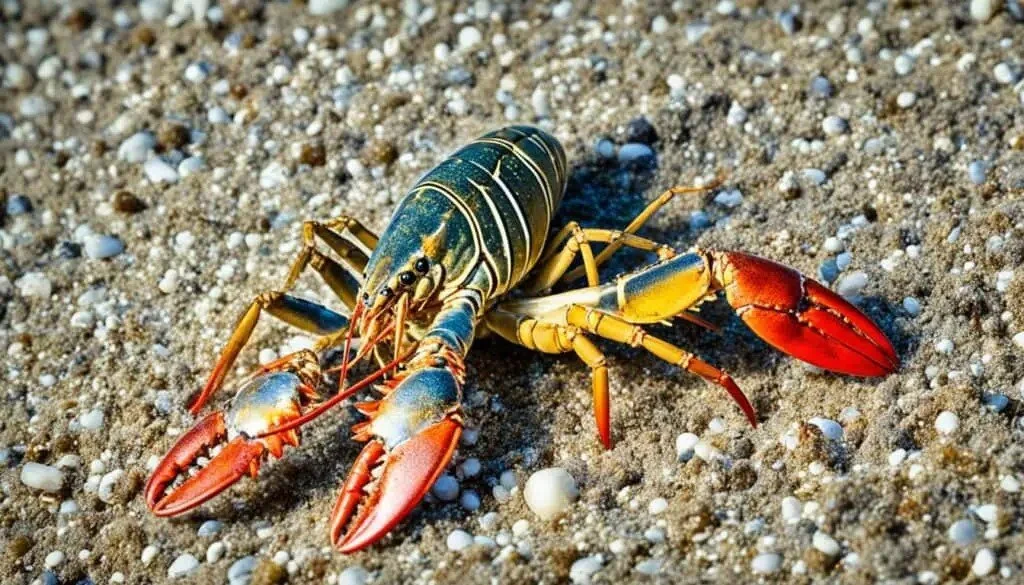
One of my favorite writers is Rabbi Dr. Abraham Twerski, a psychiatrist who did a lot of work in AA. He is an author of around eighty books. He spent his life helping people confront addiction, suffering, and despair without being crushed by them. He had a gift for translation: taking the language of psychology and rendering it into human speech. One day, while sitting in a dentist’s office, Twerski read a Nature magazine article about lobsters molting. He learned that a lobster grows until its shell becomes painfully tight. The pressure does not merely irritate; it confines. Eventually, the lobster cannot function as it once did. So it retreats under a rock, sheds the shell that once protected it, and begins—slowly, vulnerably—to form a new one.
Lobsters actually never stop growing. But growth comes at a cost. Over the course of a lifetime, a lobster may molt twenty or more times. Some eventually reach forty pounds. To watch a lobster molt—many of us have seen the footage—is unsettling. The creature splits its shell and crawls out of itself. For a time, it is soft, exposed, defenseless. The scene looks less like biology and more like a moment from a science‑fiction film.
In reading this article, Rabbi Twerski realized that this is a metaphor for us experiencing stress, pain, and life challenges. He summarized the insight with characteristic clarity:
The stimulus for the lobster to be able to grow is to feel uncomfortable. Times of stress are signals for growth, and if we use adversity properly, we can grow through adversity. (“On Responding to Stress,” https://youtu.be/3aDXM5H-Fuw?si=w9zDZ1tm-JY77veP)
The lobster has no choice but to grow or die. We, however, are burdened with the freedom to ignore the signal. We can choose to inhabit a shell that has become a coffin. Through the narcotics of consumption and the relentless hum of the screen, we attempt to silence the ache of our own expansion. But the discomfort is a messenger. It announces that the world we inhabit has grown too small for the soul that God is calling forth.
Yet the call placed before us is different. To listen rather than to numb ourselves. To recognize discomfort as a signal, not a threat. To seek clarity and deeper self‑awareness instead of fleeing the pain that is asking something of us.
Stress, then, is not simply an enemy to be defeated. It is a message. It tells us that something in us no longer fits the world we are inhabiting—or that the world is demanding a larger self than the one we have been living from.
When the Shell No Longer Fits
It is difficult to deny that we are living in such a moment. We wake, reach for our phones, and are struck—sometimes literally in the gut—by the weight of what is happening in our country and across the world. Conflict multiplies. Fear hardens. Moral shock and exhaustion has become a way of life.
Like the lobster, we experience pressure not because something has gone wrong, but because something has changed. Our familiar ways of coping—our habits, assumptions, reflexes, even our inherited theologies—may no longer stretch far enough to contain the present moment. What once protected us can begin to suffocate us.
Like lobsters, to grow we need to molt over and over again throughout our lives.
Pirkei Avot 5:23 gives this truth a blunt voice through Ben Hei Hei: “According to the pain is the gain.”
Pain here is not romanticized. It is acknowledged. But it is not meaningless. Discomfort is often the signal that growth is being demanded of us.
The Baal Shem Tov, the founder of Hasidism, taught in a similar spirit: adversity doesn't have to be an obstacle to spiritual life; it can become its instrument—if we allow it.
Vulnerability Under the Rock
When a lobster molts, it is at its most vulnerable. Without a shell, it is exposed to predators. That is why it hides under a rock. Growth does not happen in the open sea.
This matters for us.
Growth requires vulnerability, and vulnerability is frightening. Many people today feel raw, stripped of the protections they once relied upon.
Yet vulnerability, painful as it is, can also become the place where resilience is formed, where faith deepens, where compassion is born—not as an idea, but as a necessity.
The lobster does not molt alone in the open ocean. It seeks shelter. So too, in times of spiritual and emotional molting, we are called to seek refuge—in trusted friendships, in family, in congregations and communities that can hold us when we are soft and unarmored.
For me, as I struggle in these disturbing world events, the liturgy has become my rock, my safe haven, where I can rest and recuperate.
Retreat is not failure. It is preparation.
Prayer, reflection, and care for the soul are not luxuries in such times. They are the conditions that make renewal possible.
The Rock Beneath Us
Scripture presses the metaphor further still. All throughout the Torah and Besorah, Hashem is called our Rock. The rock beneath which the lobster hides can point beyond human shelter to divine refuge.
Psalm 18 declares:
The Lord is my rock, my fortress, and my deliverer; my God is my rock, in whom I take refuge.
This image courses through the veins of Jewish memory. In the shadows of the Crusades—a time of visceral terror—the authors of Maoz Tzur, which we sing during Chanukah, did not reach for a language of comfort, but for a “Rock of Salvation.” Their praise was an act of defiance. They recalled the ancestral molting—the narrow escapes from Egypt, Babylon, and Persia—not as ancient history, but as evidence that the soul can survive the shattering of its old world:
Rock of my salvation, to You it is fitting to give praise.
Restore my House of prayer,
And there I will offer thanksgiving.
The middle stanzas remember survival from our oppressors—Egypt, Babylon, Persia, Greece.
The final verse forms an acrostic spelling Chazak—be strong. It is less an encouragement and more a command: Be Strong. It is the call to harden into a new resilience while still sheltered in the Divine.
Just before the Amidah we echo the same language in Mi Chamocha:
Rock of Israel, arise to the help of Israel.
The Rock of Israel does not offer an escape from the storm, but a foundation beneath the surge. In the shelter of the Rock—in the discipline of prayer and the density of community—we undergo the quiet, agonizing work of becoming new. We do this while the world’s chaos attempts to terrify us into paralysis. We retreat not to hide, but to harden into a resilience that the world cannot shatter.
Building on the Rock
In Matthew 7:24–27, Yeshua’s mashal (parable) regarding foundations strips away the illusion of our own brilliance. When the waters rise and the winds batter the house, the only thing that endures is that which is anchored in the bedrock. Spiritual molting is the terrifying process of releasing the flimsy structures we have built for ourselves—the old that must pass away—to trust that a new creation is being forged on ground that cannot be swept away. Rav Shaul names this transformation plainly:
If anyone is united with the Messiah, he is a new creation—the old has passed; look, what has come is fresh and new. (2 Corinthians 5:17, CJB)
(Just like a lobster with his new shell!)
Ya’akov adds the difficult word we would rather avoid:
Regard it all as joy, my brothers, when you face various kinds of trials; for you know that the testing of your trust produces perseverance. (James 1:2–3, CJB)
Joy here is not cheerfulness. It is the confidence that suffering is not the final author of our lives.
We are summoned to treat our discomfort not as an enemy to be defeated, but as a signal that the shells we have inhabited—our old coping mechanisms, assumptions, and inherited theologies—no longer stretch far enough to contain the demands of the present. To grow, we must allow the pressure to drive us toward the Rock. Like the lobster beneath its stone, we must find the courage to be soft and unarmored, seeking shelter in the Rock of Israel to undergo the agonizing, necessary work of renewal. This is the "testing of our trust" that produces a perseverance more durable than any armor we could forge for ourselves.
May we refuse to numb the ache of our own expansion. May we find the wisdom to retreat into the sanctuary of community and prayer, letting the "old" pass away so that the "new creation" might emerge. Having shed what no longer serves life, let us emerge from the shadows—resilient and unafraid—ready to stand firm even as the testing continues.