
Parashat b’Ha’alot’cha, Numbers 8:1–12:16
Chaim Dauermann, Brooklyn, NY
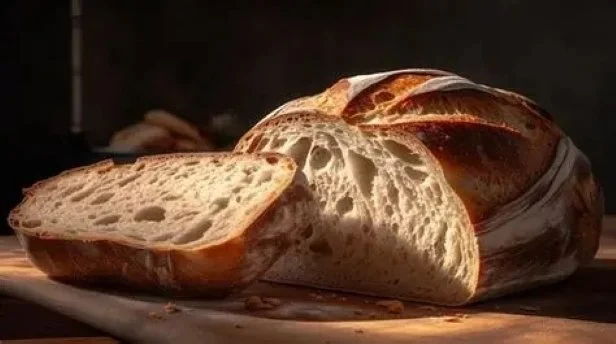
Many years ago I worked at a restaurant. Every day, we baked fresh bread there and brought it out to guests with olive oil as soon as they sat down. Anyone who wanted more was free to have more.
One evening, a man complained about the bread. He said it was terrible—some of the worst bread he’d ever had—and that other restaurants offered vastly better complimentary bread. When we explained that we had no other bread readily available, he ordered more out of spite. When it arrived, he made sure the staff witnessed him chewing the bread and loudly announcing how bad it was. When he ran out, he called for “more of this terrible bread!” (Although he used a more colorful word not suitable for publication.)
We never saw him again.
Now, most people do not make their dining decisions on the basis of the free bread. Most people are concerned about weightier things: the ambiance, the quality of the food, the value, the attentiveness of the staff. But hunger has a way of narrowing our vision. When the appetizers haven’t landed yet, the free bread can become the whole story.
In Numbers 11, the Israelites are trapped in a culture of complaint. The first verses report the people grumbling, and the Lord responding with discipline. “So the fire of the Lord burned among them, and consumed some in the outskirts of the camp” (Num 11:1). Moses intercedes, the fire is quenched, and then, almost immediately, the complaining begins again.
This time the matter is instigated by a group the text calls the asafsuf, often translated as “rabble.” Jewish tradition frequently identifies this group with the erev rav, the mixed multitude that came up out of Egypt alongside the Israelites, and it is this interpretation that informs the decisions of some translators: “Now the mixed multitude who were among them yielded to intense craving; so the children of Israel also wept again and said: ‘Who will give us meat to eat?’” (Num 11:4). The asafsuf have whipped the entire nation into a frenzy. The Israelites’ language becomes vivid: “We remember the fish which we ate freely in Egypt, the cucumbers, the melons, the leeks, the onions, and the garlic; but now our whole being is dried up; there is nothing at all except this manna before our eyes!” (Num 11:5–6.)
Egypt sounds downright pleasant here: Fish, cucumbers, melons, leeks, onions, garlic. This is not the kind of menu we would typically think to associate with slavery. The Israelites make it sound like a bountiful garden. And who wouldn’t miss a place with such abundance? But this is exactly the problem. It would seem that they are not reliable narrators. And the Sages have pointed to this as an example not of Egypt’s abundance, but of a problem in the hearts of the Children of Israel.
Sifrei Bamidbar 87 inquires: “‘We remember the fish that we would eat in Egypt, free’: Is it possible that the Egyptians gave them fish free? Is it not written (Shemot 5:18) ‘And now, go and work, and straw will not be given you.’” The midrash points out the obvious: The Egyptians who would not give them straw for bricks were unlikely to be handing out free fish. How, then, are we to understand “free?” The midrash answers: “Free of mitzvot.” Here, then, is the real substance of the complaint. The Children of Israel aren’t missing the fish. They are missing a life that was free of covenant obligation. In Egypt, they had hard labor, but in their distorted memory they were “free” from the commandments of God. In the wilderness, however, they were turned over to a different master. In both cases, much was required of them. But in this instance, so the Sages illuminate, the burdens of the Egyptians sounded preferable to the covenantal expectations of the God of Israel.
This is the irony of the whole thing: in the wilderness, they truly were eating free food. The manna cost them nothing. It fell from heaven, as an ongoing provision from God. It wasn’t purchased. It wasn’t earned. But the manna wasn’t “free” in the way that the fish in Egypt seemed to be free. The manna came along with instructions: When to gather it. How to gather it. When not to gather it. What the consequences are if the instructions aren’t heeded. Every step of the way, God must be trusted to provide. Faith was necessary.
However, no faith was required to receive fish in Egypt. The leeks came with no instructions. The garlic had no warnings. All they had attached to them were simple bondage and toil. This is one of the great temptations of living life redeemed in Messiah. If we let ourselves think obedience is difficult, our past slavery begins to look appealing. We rewrite the past to excuse our growing appetite for what we’ve told ourselves is “freedom,” and before long we miss the chains of our sins. We start to remember our former deeds as pleasant, and to forget the bitter costs attached to them. Soon, the freedom from sin that we have in Messiah begins to sound like toil, and our former life of bondage to sin starts to sound like liberty.
Rav Sha’ul gave a stark warning about this very thing in Romans:
For when you were slaves of sin, you were free in regard to righteousness. What fruit did you have then in the things of which you are now ashamed? For the end of those things is death. But now having been set free from sin, and having become slaves of God, you have your fruit to holiness, and the end, everlasting life. (Romans 6:20–22)
To paraphrase Sha’ul, we might quote the modern day sage, Bob Dylan: “You’re gonna have to serve somebody.” At the end of the day, what the Israelites could not grasp is that they were going to be in a state of servitude to somebody. Nothing is free, not manna, not fish. As the old saying goes, “There’s no such thing as a free lunch.” Or free fish. Or free bread. There are costs attached. There are debts owed. There are households to dwell in. Who better to call our Master than the one who created fish? The quality of the freebies doesn’t matter when only one path leads us to eternal sustenance.
Yeshua gave a teaching that speaks well into this very issue: “Do not labor for the food which perishes, but for the food which endures to everlasting life, which the Son of Man will give you” (John 6:27). Later, he says, “I am the bread of life. Your fathers ate the manna in the wilderness, and are dead. This is the bread which comes down from heaven, that one may eat of it and not die” (John 6:48–50).
Yeshua does not call us to a life without labor. He calls us away from laboring for things leading to death. He calls us away from the false freedom of our former lives, and toward the true freedom of the eternal life in Olam Haba, the Age to Come.
That’s some good bread.
All scripture quotations taken from NKJV.