
The Heart of a Mediator
Parashat Shoftim, Deuteronomy 16:18–21:9
Russ Resnik, UMJC Rabbinic Counsel
The Rock, perfect in every act:
Who can say to Him, “Why do You so act?”
You who speak and act: show us kindness we do not deserve,
And in the merit of the one who was bound like a lamb, hear us and act.
                                                              (From the burial service, Koren Siddur)
One of the age-old controversies between Judaism and Christianity concerns the need for a mediator between God and man. Rabbinic writings often assert that Israel needs no intermediary with God, but can approach him directly. Thus, Jewish commentator Ovadiah ben Jacob Sforno (ca. 1475–1550) comments on the first of the Ten Commandments: “I am the Lord your God” (Exodus 20:2):
I alone am Hashem who grants existence; the Prime Cause known to you through tradition and proof; and I confirm that you have accepted upon yourself My sovereignty, to be your God, with no need for a mediator. Therefore, to Me alone shall you pray, and Me alone shall you serve without any mediator.
Likewise, Rambam (Moses Maimonides, 1138–1204) says that this commandment and the one following—“You shall have no other gods before me”—“reached [Israel] just as they reached Moses our Master and that it was not Moses our Master who communicated them to them.” All Israel stood before the Lord at Sinai and received his revelation directly with no mediator.
Yet, as the prayer cited at the opening attests, another strain of Jewish thought calls out for a mediator, for one whose merit will benefit all Israel, as the merit of Isaac, “bound like a lamb,” is believed to have done. This ambivalence about a mediator reflects a tension within the biblical text itself. For example, it is true that God appears directly to all Israel at Mount Sinai, but it is also true that Moses serves as an intermediary for Israel through much of that encounter.
At Mount Sinai, Israel encounters the Lord “face to face,” according to Deuteronomy 5:4, but in the next verse Moses “stands between” the Lord and Israel to mediate the divine word. Indeed, this seems to be Moses’s unique place within the story of the Jewish people. He alone regularly communicates with the Lord “face to face” and brings the report of this communication back to the people. Moses, then, indeed serves as mediator between God and Israel.
God desires to bring us near but his transcendent purity and holiness create a distance that must somehow be bridged.
In this week’s parashah, Moses is contemplating the end of his life, which means the end of his mediatory work. We might ask, was his mediation necessary only for the first generation, those who received the Torah at Mount Sinai? Can Israel now meet with God face to face with no one to stand between them and him? No, Moses says that when he is gone,
The Lord your God will raise up for you a prophet like me from among you, from your brothers—it is to him you shall listen—just as you desired of the Lord your God at Horeb on the day of the assembly, when you said, “Let me not hear again the voice of the Lord my God or see this great fire any more, lest I die.” (Deuteronomy 18:15–16)
This prophet will be a mediator in the same way that Moses was a mediator. Like Moses, he will hear the voice of the Lord and then he will speak to the people. Through him, God will reveal himself to Israel. “And whoever will not listen to my words that he shall speak in my name, I myself will require it of him” (Deuteronomy 18:19).
The Torah will conclude at the end of Deuteronomy with a statement that the prophet like Moses had not yet appeared. “And there has not arisen a prophet since in Israel like Moses, whom the Lord knew face to face. . .” (34:10). For Messianic Jews, of course, this prophet arose many centuries later, in the person of Yeshua of Natzeret.
Citing our text from this week’s parashah, Peter urges the Jews of Jerusalem to return to God through trusting in Yeshua.
Repent therefore, and turn back, that your sins may be blotted out, that times of refreshing may come from the presence of the Lord, and that he may send the Messiah appointed for you, Yeshua. . . . Moses said, “The Lord God will raise up for you a prophet like me from your brothers. You shall listen to him in whatever he tells you.” (Acts 3:19–20, 22)
This is a fitting text as we enter the forty-day period of teshuvah, turning or repentance, which traditionally runs from the first day of Elul, beginning sundown August 13, to the closing of Yom Kippur, September 21. We also, along with our Jewish brothers and sisters in Jerusalem, are called to “repent and turn back.” I won’t seek to detail all the possible ways in which we need to turn to God, but will highlight one example that Moses and the prophet like Moses provide for us.
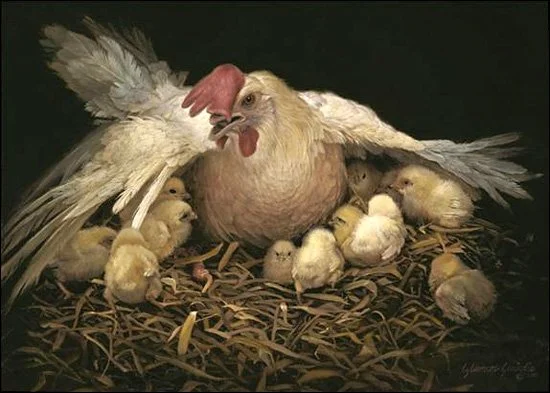
When Moses went before the Lord to seek forgiveness for Israel after the sin of the golden calf, he revealed the depth of his burden for the people: “But now, if you will forgive their sin—but if not, please blot me out of your book that you have written” (Exodus 32:32). Moses stands inseparably with his people and finds their estrangement from God insufferable. Yeshua bears a similar burden for his people. On his way to Jerusalem, he tells the holy city, which represents all Israel: “How often would I have gathered your children together as a hen gathers her brood under her wings, and you were not willing!” (Luke 13:34).
Later, as “He drew near and saw Jerusalem,” Luke tells us, “He wept over her,” yearning for her salvation (Luke 19:41).
During our season of teshuvah this year, it is essential to remember our mediator, Messiah Yeshua, the prophet like Moses. The promise in Deuteronomy 18 is familiar enough to us, especially in the Messianic Jewish world, but we need to go beyond mobilizing it as a proof text. Rather, can we join our hearts with Messiah’s heart for the brood of Israel that he longs to gather under his wings? As we remember our need for restoration during this season of self-examination and repentance, we are thankful for the One who stands before God on our behalf. But can we also look beyond our own need for restoration and share in the burden that Messiah Yeshua carries for the restoration of all Israel? “O Jerusalem, Jerusalem, how often would I have gathered your children together, as a hen gathers her brood under her wings.” May his longing fuel our prayers this season!
Article adapted from Creation to Completion: A Guide to Life’s Journey from the Five Books of Moses, by Russell Resnik (Lederer Books, 2006).