
Parashat Vayishlach, Genesis 32:3-36:43
Lieutenant Junior Grade Jacob Landers, UMJC-Endorsed U.S. Navy Chaplain Candidate
Kehilat Ariel Messianic Synagogue, San Diego
VaYishlach, the name of this week’s parasha, means “and he sent” and refers to the messengers that Yaakov sends to his brother, Esav, informing him that he does not want war but peace with his brother.
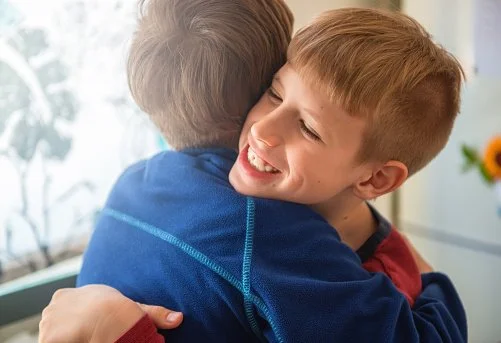
As a father of two young boys, one of the most heart-wrenching moments for me is when my boys hurt each other, start a fight, take from the other, or even just have anger towards each other. I see the very best of them and get to bear witness to their moments of pure genius, joy, and enthusiasm, and I want them to see that in each other at all times. Conversely, one of the most kvelling moments I get is to see them recognize how the other is hurt, set aside their pride, hug it out, and then watch them encourage each other or share toys; an unprompted “I’m sorry, buddy” brings a joyful tear to my eye.
In this parasha, Esav had every right to be angry with his brother, Yaakov. Yaakov bought Esav’s birthright for a bowl of pottage, deceived his father into giving him his blessing, and then made off to another land with the help of his mother. By these actions, “supplanter” seems like a worthy meaning for Yaakov’s name!
At the same time, Yaakov had every right to be upset; his older brother, who is supposed to teach him through his actions how to be a good and noble man instead sells off his birthright for a snack; a snack that Rabbeinu Bahya tell us was the mourning meal for their grandfather, Abraham, deepening the disrespect (Rabbeinu Bahya, Bereshis 25:29:1). Yaakov makes a mourning meal for their parents. Esav returns from hunting and, instead of caring for their parents, “gladly” sells the gift that God had given to him, so that he “spurned his birthright” (Gen 25:34 JPS). The commentators even note that “Esau committed five different sins that very day” (Bava Batra 16). In a blossoming theme by this point, the younger brother becomes more blessed than the “rightful” son.
When the messengers returned to Yaakov, they told him that Esav was, indeed, coming to meet him but with a retinue of 400! (Gen 32:7). The Scripture explicitly tells us that Yaakov was afraid or “greatly frightened” (Gen 32:8). Esav, it seems, was on the warpath. Yaakov then does something that I often forget to do when about to face something terrifying; he prays. He asks Hashem for deliverance and blesses him for all the kindness (or faithfulness-חֲסָדִים) he has shown him. “With my staff alone I crossed this Jordan, and now I have become two camps” (Gen 32:11). So, Yaakov divided his camp, selected gifts for his brother to “propitiate him” (Gen 32:21), and sent them across the river.
The next thing that happens I have often wondered about. The text tells us that “Jacob was left alone. And a figure wrestled with him until the break of dawn” (Gen 32:25). As perplexing as it sounds, the only real fact we are presented with is that a figure or angel, seemingly out of nowhere, simply approaches Yaakov and immediately they wrestle! But not only do they wrestle, they wrestle all night until the sun begins to dawn! Where did the figure come from? Was he lying in wait? Why, exactly, did they wrestle? It sounds both utterly confusing and, frankly, utterly hilarious, that a figure appears out of nowhere and just body-slams Yaakov to the ground where they wrestle all night. But, once the dawn breaks, the figure “wrenched Yaakov’s hip at its socket, so that the socket of his hip was strained as he wrestled with him” (Gen 32:26) But Yaakov did not let go. Yaakov did not stop wrestling with the figure until he blessed him. It is here that something wonderful happens.
The figure blesses Yaakov by telling him, “Your name shall no longer be Jacob, but Israel, for you have struggled with God and with man, and have prevailed” (Gen 32:29, NKJV). Yaakov’s name is changed to Israel, a name that all of us are now under—Jews being naturally born as sons and daughters of the sons of Israel, and non-Jews being grafted into the commonwealth of Israel; adopted into the family. Equally amazing is that when Israel asked the name of the figure, the figure told him, “you must not ask my name!” (Gen 32:30).
Finally comes my favorite part of this story: “Esav ran to greet him. He embraced him and, falling on his neck, he kissed him; and they wept” (Gen 33:4). At last, the brothers are united and Esav, who was on the warpath, kisses his brother and they weep together. The images in my mind of my own toddler sons, reconciling to kiss one another, brings tears to my eyes. But in this story, there are a few lessons.
First: Struggling with God is a holy endeavor. We ought to be struggling with God and to continue struggling until we are blessed! In fact, as members of the family of Israel, we, most of all, ought to be struggling with God (and not against him). It is through the struggles that we truly live out our heritage and our commonwealth.
Second, it is only after prayer and struggling with God that Yaakov/Israel is able to reconcile with his brother—not by his own efforts, but by asking God to intervene in his kindness and faithfulness.
Finally, there is a blessed hope that is introduced later in this parasha.
Yaakov gave the site, where God had spoken to him, the name of Bethel. They set out from Bethel; but when they were still some distance short of Ephrath, Rachel was in childbirth, and she had hard labor. When her labor was at its hardest, the midwife said to her, “Have no fear, for it is another boy for you.” But as she breathed her last—for she was dying—she named him Ben-oni; but his father called him Benjamin. Thus Rachel died. She was buried on the road to Ephrath—now Bethlehem. (Gen 35:15—19)
The son of Yaakov’s favor, Benjamin (who we will see again in an important way in the story of Yosef) is born even though his mother dies. She means to call him Ben-Oni, son of my suffering, but Israel calls him Benjamin, son of my right hand; as if to say that the youngest son will become like the first-born—the highest position of honor. Also, it is no coincidence that he was born in Beit-Lechem (or Bethlehem), the house of bread. All these are Messianic allusions.
We know that Messiah—in the image of Yosef—must suffer, be dropped into a pit, unrecognized by his own people, but will ascend to the right hand of the king; this is why he is called “Mashiach ben Yosef.” But this is the hope delivered through Israel: that the son that once was the son of my suffering has become the son of the right hand and his name is “salvation,” Yeshua. Born a son of Israel in Beit-Lechem, he suffered, died, and was buried, but conquered death—the ultimate struggle—and ascended to the right hand of the King of kings so that we may all be reconciled to God! As Rachel was comforted by the midwife, so may we be comforted: “have no fear, for you also will have this son!”
Each of us will struggle with God, but hang on in your wrestling—don’t let go until you realize the blessing! Be reconciled. If you wronged someone, seek forgiveness; if you were wronged, give forgiveness freely without prompting. Finally, Pray. Pray for your leaders, for your congregation, for each other, for yourself, and for Israel to see the son of suffering and instead call him the son of the highest honor.