
Parashat Bo, Exodus 10:1-13:16
Jennifer C., Kol Mashiach Messianic Synagogue, Melbourne, FL
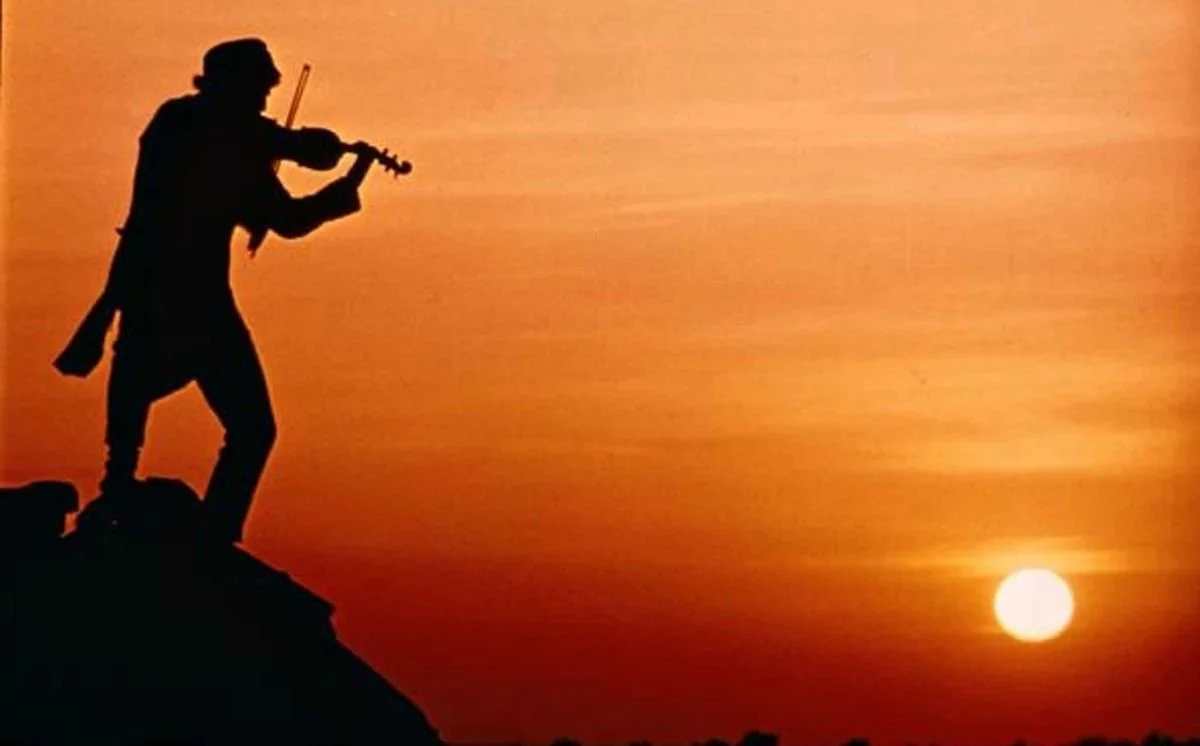
Who is not familiar with the repeated refrain of Tevye the milkman from the opening song of Fiddler on the Roof?—“Tradition!” It is part of the fabric of Jewish life. You cannot be Jewish without knowing about and participating in the various traditions of Judaism. In the words of Tevye, “Here in Anatevka we have traditions for everything . . . how to sleep, how to eat, how to work, how to wear clothes.”
The story of Tevye and his family navigating tradition in the fictional village of Anatevka set in the Pale of Settlement in 1905 is one snapshot of what has been a part of our lives since our birth as a people. Some of our traditions go back to the time of the Torah but have seen changes in how they are implemented, like the wearing of tzitzit, based on clothing styles and cultural nuances. Other traditions are rooted in the experiences of a subset of the Jewish people and their lived experience, as is often the case with traditional foods connected to Jewish holidays. But the presence and importance of tradition in Jewish culture, religion, and experience is undeniable.
According to the Merriam-Webster dictionary, tradition is “an inherited, established, or customary pattern of thought, action, or behavior.” Tevye may be puzzled as to how traditions get started, but he definitely understands their purpose: “You may ask, why did this tradition get started? I'll tell you why—I don't know. But it's a tradition, and because of our traditions, everyone knows who he is and what God expects him to do.” Tevye expresses what science knows, that tradition helps you to understand who you are in the world you inhabit. It grounds you in a cultural system that existed before you and will continue after you and extends your reach to a community of people larger than you can see. This is how the Jewish people have maintained a shared identity across such extensive space and time—shared tradition. Moroccan Jews, Ethiopian Jews, Jews of Eastern European descent, Sephardic and Mizrachi Jews—we all share traditions that connect us. It is something that is found in the collective community and its continuity is dependent on passing it down to the next generation.
God created us to be people that attach memories and experiences to our senses. Traditions, more often than not, are primarily expressed as things that engage the senses. When I mention Thanksgiving dinner you can see the table heaped with turkey, mashed potatoes, and pumpkin pie, while practically tasting your favorite dishes as you think of them. Celebrations of the 4th of July seem hollow if we haven’t heard fireworks or had something to eat that was barbecued.
This is no less the case in Judaism. The boundaries of each Shabbat are guarded by traditions that engage the senses. The glow of candles and the sweetness of wine and rich challah mark Shabbat’s beginning on Friday night, while the smell of the havdalah spices and the hissing sound of the braided candle as it is extinguished in the wine signal its end. The emergence of menorahs covered in last year’s melted wax and the smell of frying food alert us to Chanukah’s arrival. Even as I have shared this short list, I’m sure you were thinking of these same traditions or others unique to your experience that run like a thread through your memories, engaging the senses and connecting you to the past.
Tradition may teach us about ourselves and what God expects us to do, as Tevye expressed, but in Judaism it also teaches us theological lessons about who God is and what he has done for us, the Jewish people. In this week’s parasha, God commands us to do something that has become expressed in a tradition that you might be unaware of.
We begin with the opening verses of Exodus 10:
Then the LORD said to Moses, “Go to Pharaoh, for I have hardened his heart and the heart of his servants, that I may perform these signs of Mine among them, and that you may tell in the hearing of your son, and of your grandson, how I made a mockery of the Egyptians and how I performed My signs among them, that you may know that I am the LORD.” (Exodus 10:1-2)
God tells Moses that he is performing the signs of the plagues on the Egyptians so that the story can be told to the sons and the grandsons, l’dor v’dor—from generation to generation. After this opening directive, we see three other instances in which God specifically directs dialogue between father and son related to the Passover experience: Exodus 12:26–27, Exodus 13:8, and Exodus 13:14–15. A fourth instance is found in Deuteronomy 6:20–25.
How did the sages determine that we should fulfill this mitzvah? The Jerusalem Talmud (Pesachim 10:4) tells us “Rebbi Ḥiyya stated ‘The Torah spoke about Four Children’” often translated as the Four Sons in our Passover Haggadah. The discussion of the Four Sons helps us tell the story of the Exodus and fulfills the command that is given four times to speak to our children about the Passover. The Wise Son corresponds to Deuteronomy 6:20. The Wicked Son is found in Exodus 12:26. The Simple Son corresponds to Exodus 13:14, and the Son who does not know how to ask is addressed by the parent in Exodus 13:8. What may seem to some (and honestly, to me for many years) as an odd part of the haggadah is actually a tradition that fulfills the mitzvah to speak to our children about Passover. It is a tradition that engages the sense of hearing through story-telling about the Four Sons.
Connected to the Four Sons is a tradition that engages the visual learning centers of our memories. Two of these passages about the sons (Exodus 13:8,14) come right before the command to wear tefilin:
And it shall serve as a sign to you on your hand, and as a reminder on your forehead, that the law of the Lord may be in your mouth; for with a powerful hand the Lord brought you out of Egypt. (Exodus 13:9)
So it shall serve as a sign on your hand and as phylacteries on your forehead, for with a powerful hand the Lord brought us out of Egypt. (Exodus 13:16)
To the outside world, placing a leather box on your head and arm and winding leather straps tightly down your arm seems incredibly odd—much like telling a story about four sons in the middle of a commemoration of the Exodus. The tradition of how we fulfill this mitzvah is enumerated in various religious texts, but the “why” is what is important here.
The practice of “wrapping tefilin” almost always raises questions if you are doing it anywhere that is not in private or in a synagogue. But the first people to ask a man why he is putting on tefilin are his children. “Why do you do this, dad? What does it mean?” Putting on tefilin every day is an opportunity to teach the next generation that our existence is inextricably linked to our deliverance from Egypt by the powerful hand of God. The picture of seeing your father beginning his day in obedience to God through prayer and practice is a powerful lesson for a child and a visible sign of distinction, separation, and commitment to the God of Abraham, Isaac, and Jacob.
In Parashat Bo, a portion filled with plagues, Pharaoh, and Passover instructions, we are reminded that woven into the fabric of our history, God has provided tangible, sensory traditions that remind us of who he is and who he has called us to be. By practicing our traditions in our homes and our communities, passing down the practice of what it means to live as a Jew, we strengthen each generation’s connection to Judaism and to the God of Israel.