
Parashat Lech L’cha, Genesis 12:1–17:27
Joe Miterko, Kol Mashiach, Melbourne, Florida
Back to B’reisheet
I love it when we turn the Torah back to the beginning and revisit our old friends. Some love the stories of Moshe and the exodus from Egypt. Others enjoy the story of Yosef and the reconciliation with his brothers. Each time we read about these characters, we can enter in and engage in their story in a deep and meaningful way.
Get Up and Go!
One of the first people we read about in our Torah cycle is Avraham Avinu (Abraham our Father). He is indeed the father of faith. Through him, God blesses the whole world. Our parasha begins with some familiar verses:
Now Adonai said to Avram, “Get yourself out of your country, away from your kinsmen and away from your father’s house, and go to the land that I will show you. I will make of you a great nation, I will bless you, and I will make your name great; and you are to be a blessing. I will bless those who bless you, but I will curse anyone who curses you; and by you all the families of the earth will be blessed.” (Genesis 12:1–3)
Lech L’cha, the title of our parasha, means “go for yourself.” Rashi says about this passage, “He (Hashem) did not reveal the land to him (Avram) immediately, in order to make it dear in his eyes and to give him reward for every command.”
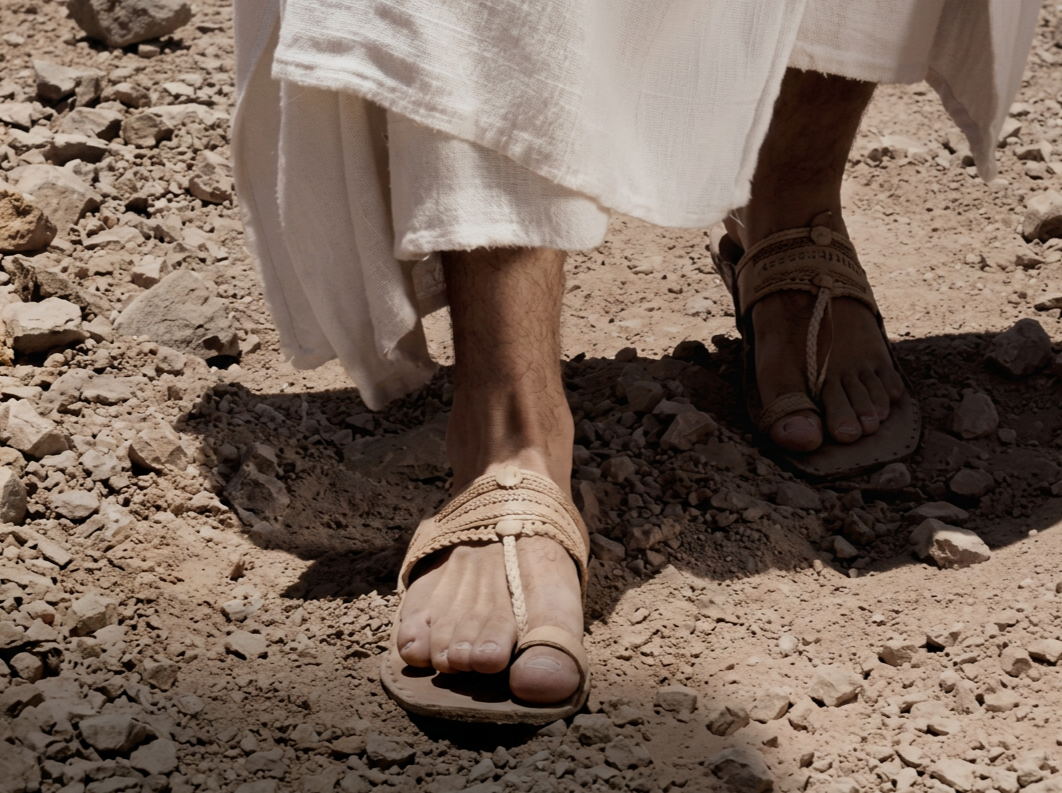
Isn’t this hard? In our world where we can have instant anything, but Avram must journey from his homeland of Haran to the land of Canaan. A map was not provided, nor was a GPS. Indeed, the writer of Hebrews says,
By faith Abraham obeyed when he was called to go out to a place he was to receive as an inheritance. He went out, not knowing where he was going. By faith he migrated to the land of promise as if it were foreign, dwelling in tents with Isaac and Jacob—fellow heirs of the same promise. (Hebrews 11:8–9)
This trek is nearly 400 miles and who knows how many villains and robbers would emerge along the way? Still, this did not affect Avram, as he was willing to make this journey. This portion is not just about a stagnant boring journey. In fact, Abraham’s obedience and God’s faithfulness are on full display.
A Holy Mission
Rabbi Shlomo Riskin, chief Rabbi of Efrat, raises some clarifying points about Avraham’s journey. He says, “Abraham was made a great nation because he had a mission. . . . He is in fact the first missionary. He builds altars and calls on the name of HaShem his God.” We see Abraham building altars to God (see 12:7-8, 13:18). He does so proudly and exuberantly.
Riskin adds, “Not only was Abraham a missionary, but he led as an example from the front. He was a militant missionary . . . he was willing to fight for his faith.” We see this quite clearly in Genesis 14 in the war with the five kings. With a small army of 318 people, Abram overcomes all of them. His nephew Lot was kidnapped, but Abram rescues him. Mind you, Abram left his family home at the age of 75. He was not of the usual age of fighting.
Blessed and a Blessing
This parasha also introduces us to Melchizedek. We read,
Now after he returned from defeating Chedorlaomer and the kings who were with him, the king of Sodom went out to meet him in the Valley of Shaveh (this is the King’s Valley). Then Melchizedek, king of Salem, brought out bread and wine—he was a priest of El Elyon. He blessed him and said,
“Blessed be Abram by El Elyon,
Creator of heaven and earth,
and blessed be El Elyon,
Who gave over your enemies into your hand.”Then Abram gave him a tenth of everything. (Genesis 14:17–20)
Melchizedek is described as a priest of El Elyon. After Abram stood for the one true God in battle, Melchizedek comes up to meet and bless him. Not only that, Abram reciprocates by giving a tenth of everything. This is where our earliest concept of tithing emerges. Even in this example, we see God blessing those who bless Abram and his family and making light of those who curse them.
Our Journeys
Each day, God calls us to walk with him—a Lech L’cha of sorts. A journey awaits us each day. We must do the works and have all the faith of Abraham. Rav Sha’ul says,
What then shall we say that Abraham, our forefather according to the flesh, has found? For if Abraham was set right by works, he has something to boast about—but not before God. For what does the Scripture say? “Abraham believed God, and it was credited to him as righteousness.” Now to the one who works, the pay is not credited as a gift, but as what is due. But to the one who does not work, but trusts in Him who justifies the ungodly, his trust is credited as righteousness. (Romans 4:1–5)
We are called to have an active faith. We are to be filled with good deeds and mitzvot while trusting in God’s promises. Like Abraham, we do not have a roadmap of where we are in life. We never know where God will lead us or when, but it will always be in his perfect timing. Also, like Abraham we must continue to share the good news and fight for it. Rav Sha’ul reminds us:
Finally, be strong in the Lord and in His mighty power. Put on the full armor of God, so that you are able to stand against the schemes of the devil. For our struggle is not against flesh and blood, but against the rulers, against the powers, against the worldly forces of this darkness, and against the spiritual forces of wickedness in the heavenly places. (Ephesians 6:10–12)
As we continue to read through the story of Abraham, may we be encouraged to build our commitment to Hashem and be filled with faith and good deeds.