
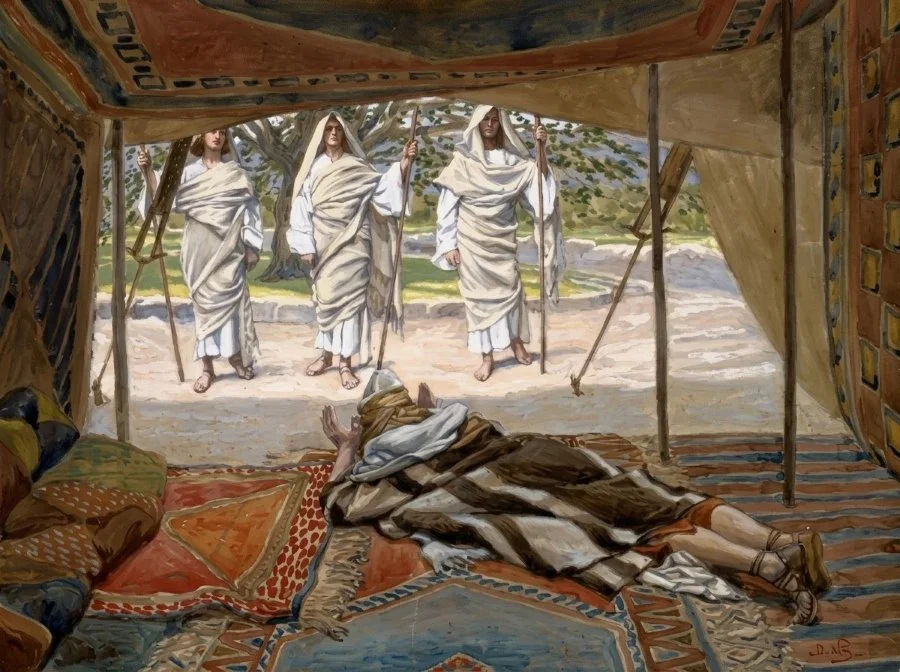
Parashat Vayera, Genesis 18:1–22:24
Rabbi Ira Brawer, Shalom Boca, Boca Raton, Florida
Parashat Vayera is one of the most dramatic portions in the Torah. It begins with the physical appearance of the Lord along with two others, presumably angels, who bring Abraham news of the son to come, and ends with the account of the Akedah, the binding of Issac. In between we have the story of Abraham’s interceding on behalf of Sodom, Sodom’s destruction, Isaac’s miraculous birth, Hashem’s interaction and promise to Hagar and Ishmael after they are banished, and much more.
With all the drama that unfolds in this parasha there is a common theme throughout: Hashem is interacting on a very personal level, mostly with Abraham, but even with Hagar and Ishmael. With Abraham, starting with the opening words, that he “appeared.” This speaks about the God of heaven and earth taking on human form and showing up with two others, presumably angels also in human form, to have a meal with Abraham and Sarah and deliver the news that they would finally have that promised son a year later. That is pretty personal!
Rashi explains that Rabbi Hama bar Hanina taught that this appearance occurred on the third day after Abraham's circumcision. God came to inquire about Abraham's well-being.
The idea here is that Hashem personally comes to Abraham to deliver the message of the impending miraculous birth, speaks with him, listens to him, and is willing to negotiate with him over the fate of Sodom. He personally interacts with Abraham.
In an apparent side conversation with the two angels the Lord reveals a key verse in the parasha:
For I have made myself known to him so that he will command his sons and his household after him to keep the way of Adonai by doing righteousness and justice, so that Adonai may bring upon Abraham what he has spoken about him. (Genesis 18:19)
This verse comes immediately before Hashem reveals his intentions concerning Sodom and explains why he chose Avraham to have this special relationship and why he is including him in the plans for Sodom’s destruction.
In his commentary on this verse Rashi focuses on the Hebrew expression ki yedativ (כִּי יְדַעְתִּיו), commonly translated “for I have known him” or “I have made myself known to him.” Rashi explains that the word conveys affection and closeness. He connects it with the idea that when someone loves another person, he draws that person near and becomes intimately acquainted with him.
Rashi then explains that God values Abraham because Abraham will teach his children and household to keep God's ways.
In this interaction over his intentions regarding Sodom the Lord is not simply giving Abraham information about what he intends to do, but allows Avraham to ask questions, appealing to his justice and mercy. We might wonder what chutzpah Abraham had in this negotiation with the Almighty One, yet we see God’s mercy, compassion, and justice as he was willing to interact with Abraham because of the intimacy of their relationship. It is an amazing picture of the relationship in which Abraham can speak honestly with Hashem, approaching him with reverence but also with confidence. In appealing to the Lord’s righteousness, justice, and mercy, Abraham displays understanding and a sense of closeness to him, as he says,
Far be it from you to do such a thing—to cause the righteous to die with the wicked, so that the righteous and the wicked share the same fate! Far be it from you! Shall the Judge of the whole world not exercise justice? (Genesis 18:25)
Of course we all know what happens next, in that God agrees to withhold judgment on Sodom if there were just “ten righteous,” which there apparently were not and so destruction came. But yet, we see that even in his execution of judgment, because of Abraham’s righteousness, the Lord He spared Lot and his family.
So it was, as God destroyed the cities of the surrounding area, that God remembered Abraham, and sent Lot out of the midst of the upheaval, when he demolished the cities where Lot had dwelt. (Genesis 19:29)
We know that Lot was no angel, as the next story tells us, where the corruption and immorality of Sodom affected even his daughters resulting in them becoming pregnant by their father. However, because of the covenant that the Lord extended to Abraham’s family, he showed mercy and compassion to Lot, his wife and his two daughters, and sent the two angels to rescue them before the destruction. Again, we see Hashem acting out of that covenant love that he had with Abraham.
Then in chapter 21 we see the fulfillment of the promise of the birth of Isaac in Abraham and Sarah’s old age. God is a keeper of his word! Then of course the parasha ends with probably its most dramatic scene, the Akedah. This is the ultimate test of the relationship between God and Abraham, when Abraham is called to put that which is most precious to him on the altar as a demonstration of his faith, loyalty and obedience. As we know, Hashem did not make Abraham go through with sacrificing Isaac, but in Abraham’s willingness he demonstrated his absolute trust even when he didn’t know the outcome. Again, it goes back to the closeness in relationship that was established when the covenant was cut back in chapter 15, with Abraham now demonstrating his faith through his action.
Instead of requiring Isaac as a sacrifice, God provides a substitute, the ram, a foreshadowing of the greater substitute that will come, Yeshua the lamb of God who takes away the sins of the world.
So, what can we learn from the relationship that Abraham had with Hashem as we see in this week’s parasha? There are many lessons, but the biggest takeaway to me is about the level of relationship that Abraham had with God. Hashem does not remain distant from Abraham—he personally comes to him, speaks with him, listens to him, tests him, and guides him. Their relationship is personal and ongoing, not simply a matter of Abraham following a set of instructions. We also see that out of that relationship there was a purpose. Abraham becomes the father of a great nation, an example of faith and faithfulness to his descendants and a blessing to all the nations of the earth. We also see times of difficulty and challenge with the sending away of Hagar and Ishmael, and most challenging, the akedah.
In a similar way, as we grow in our relationship with Hashem, we begin to understand not only his desire for relationship and intimacy with us, but also that he has purposes for us to be a “light to the world” and carry the faith of Abraham to our children and to others. Sometimes we are called to do difficult things as Abraham was, sometimes there will be testing and unforeseen challenges that he calls us to, and sometimes he does it with lots of drama, as we see in this week’s parasha!