
Parashat Vayikra: Leviticus 1:1–5:26
Ben Volman, UMJC Canadian Regional Director
The closing sentences of Exodus are like the finale of a great symphony. The epic story of Israel transformed into a nation united with God in the covenant at Mount Sinai concludes with a thunderclap of visible divine power. The Tabernacle, where Israel is meant to fully experience and sustain their new relationship with God, is so filled with the Presence of the Lord that Moshe is unable to enter. There is a further note concerning this Presence, that Israel would not move until they were led by the cloud “throughout all their journeys” (Exod 40:36).
In contrast, the opening of Leviticus, which begins at the moment when Exodus concludes, can seem mysteriously subtle and poetically crafted. Vayikra el-Moshe vaydaber Adonai elav (“Now Adonai called to Moshe and spoke to him,” v. 1). The opening word of the text brings us back to that familiar yet unique call that Moses first heard at the burning bush. According to Rashi, the sound of this call can be compared to the voices “that ministering angels employ.” Nachmanides describes the call as a word of “affection and endearment” to his servant and, by extension, to all those who respond to its message.
Israel remains camped at the foot of Mt. Sinai and goes no further in the pages of Leviticus. Yet Vayikra is a call for Israel under the cloud of the Presence to take a personal journey into the depths of God’s wellspring of chesed v’shalom, lovingkindness and peace. As Nachmanides suggests, it is God’s caring invitation for all who entered the covenant at Sinai to draw close in worship, prayer, and obedience to his word. The invitation is openly addressed to “adam,” properly translated as “anyone.” Men and women alike are welcome; despite their hesitations from failure, broken relationships, sin and shame, they will be received with respect and dignity. Despite the overwhelming details of the sacrifices, the purpose was to remove the barriers between us and our Creator.
Our modern concept of a sacrifice is usually focused on the value of what we’ve given or given up. Here, the word for offering, korban, is derived from the root karav, which means “close” or “near.” The korban brings us near with the purpose of showing reverence or paying homage. The material value of the offering is not important. This act of drawing near must also take place in the heart of the worshiper, coming with the right intentions and attitudes. As the psalmist writes, “The sacrifices of God are a broken spirit. / A broken and a contrite heart, O God, / You will not despise” (Psa 51:19).
Leviticus begins by describing voluntary offerings or gifts from anyone who has a need or impulse to seek God, whether one had completed a vow, sought help in times of distress, or wished to celebrate in gratitude. The first offering described here is the olah or burnt offering. Olah, meaning “to ascend,” reflects the distinctive aspect of sacrifices on the altar which rise to heaven as smoke. It is completely consumed on the altar and represents the unreserved devotion of one who comes to worship. This is the offering that Noah gave after the flood and that Abraham brought after the binding of Isaac. The offering was a healthy, domesticated animal “without defect” from one’s herds or flocks, but if one could not afford this, an inexpensive bird or fowl was sufficient. If one was utterly reduced in poverty, even a handful of flour would suffice.
The worshiper would be received by the priest in order to understand their reasons for coming and then have them lay their hands on the offering. The Hertz Chumash comments that no offering would be made in silence and from the beginning the priests must have required prayer and confession with the “laying on of hands.” Walter Brueggemann suggests that we may be hearing the voices of these confessions in the penitential psalms, such Psalms 6, 32, 51, and 130.
In his commentary on the sin offerings in Leviticus, Nachmanides tells us there is to be a complete identification with the sacrifice as a substitute: a life given for our life, which would not be spared “were it not for the lovingkindness of the Creator.” Afterwards, blood of the offering is poured out for the priest, who completes the necessary preparations for atonement. The principle is stated in Leviticus 17:11: “For the life of the creature is in the blood . . . it is the blood that makes atonement.” Depending on the era in which the sacrifice took place, blood was applied either to the horns of the altar or literally splashed on the corners of the altar covering every direction. In either case, the symbolic meaning is beautifully reflected in Psalm 103:12: “As far as the east is from the west / so far has He removed our transgressions from us.”
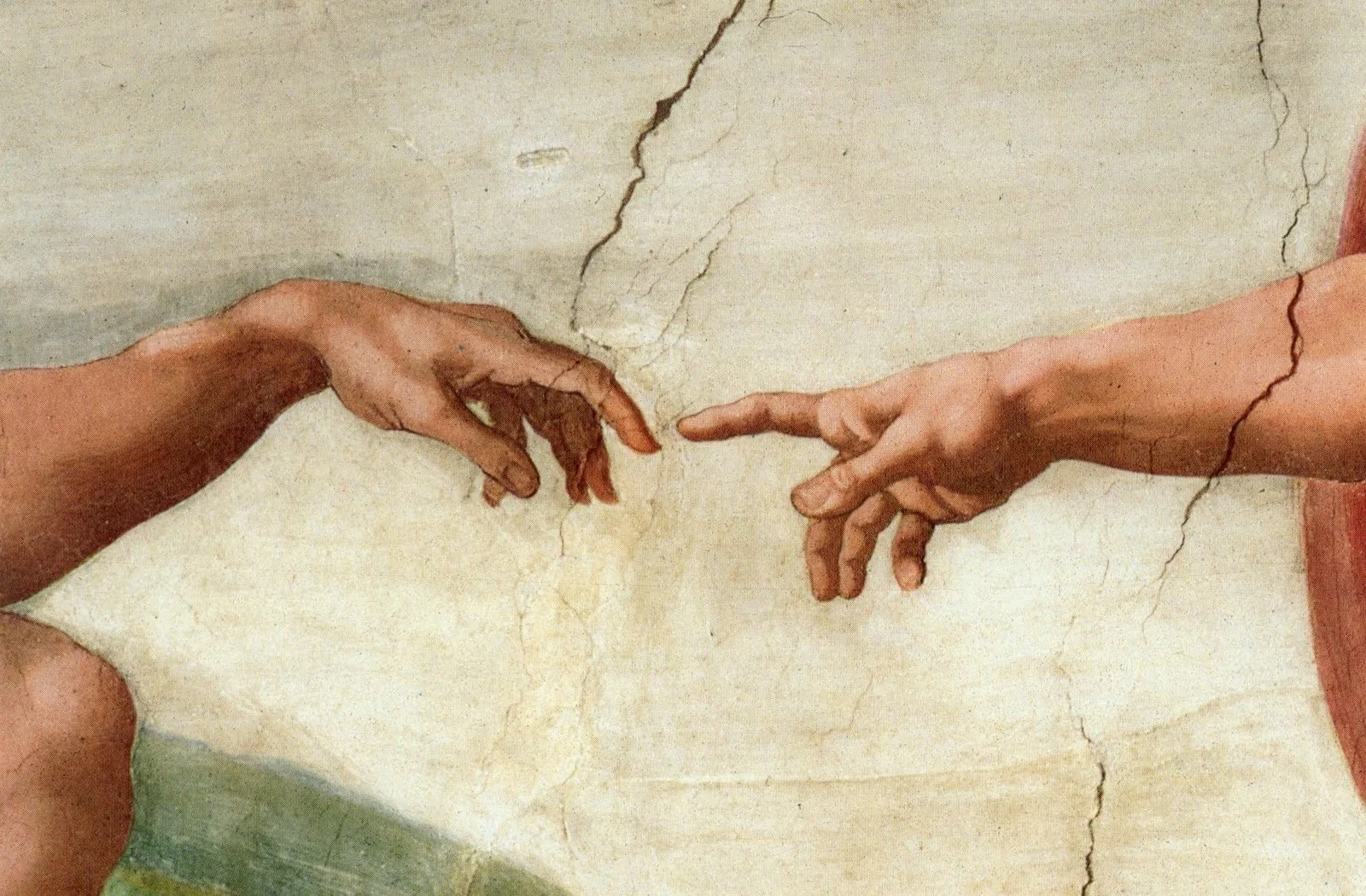
When Walter Bruegemann describes our innate awareness of the distance between humanity and a holy God, he recalls the famous image from Michelangelo’s painting of the Creation. God and Adam are reaching out to each other with fingers extended but not touching. “In Israel, however, unlike the Sistine Chapel,” he notes, “they do make contact!”
The assurance of atonement, the full reconciliation between the worshiper and their Creator, is the most powerful aspect of these passages in Leviticus. Our inward journey is complete because the barriers that have separated us from God and also from one another are lifted. Voluntary offerings to provide personal restoration with others are described in Leviticus chapter 3 as shelamim. The word is variously translated as “peace,” “thanksgiving,” or “well-being” offerings. They began with the same rituals as the burnt offering, but only a small piece of the sacrifice was placed on the altar. Apart from the portion due to the priest, the rest was shared as a solemn celebratory meal shared by one’s family and invited guests as an act of community reconciliation.
It is unfortunate that the spiritually rich message of Leviticus has largely been lost in an age longing for connection. Lori Gottlieb, who writes an advice column for the New York Times, Ask the Therapist, receives thousands of letters each week from people who feel too isolated to turn elsewhere. She has come to understand that in this age of constant digital connections there is a deep dissatisfaction. Most of those questions, she says, convey the same essential need: “How do I connect? And how do I feel seen, heard, understood, valued, and respected?”
During these challenging times, most of us are overwhelmed by floods of information and social media that distract us from following our hearts to make those needed spiritual inward journeys. Let’s recall our ancestors who were ascending up to the Temple with their offerings and probably carried in their hearts emotions and struggles similar to those we are feeling now as they sang from Psalm 130:
Out of the depths I cry to You, Adonai!
Lord, hear my voice!
Let Your ears be attentive to the sound of my supplications.
If You, Adonai, kept a record of iniquities—
my Lord, who could stand?
For with You there is forgiveness,
so You may be revered.
I wait for Adonai, my soul waits,
and in His word I hope. . . .
He will redeem Israel
from all its iniquities. (Psa 130:1-5, 8)
All Scriptures citations are from the TLV.
.