
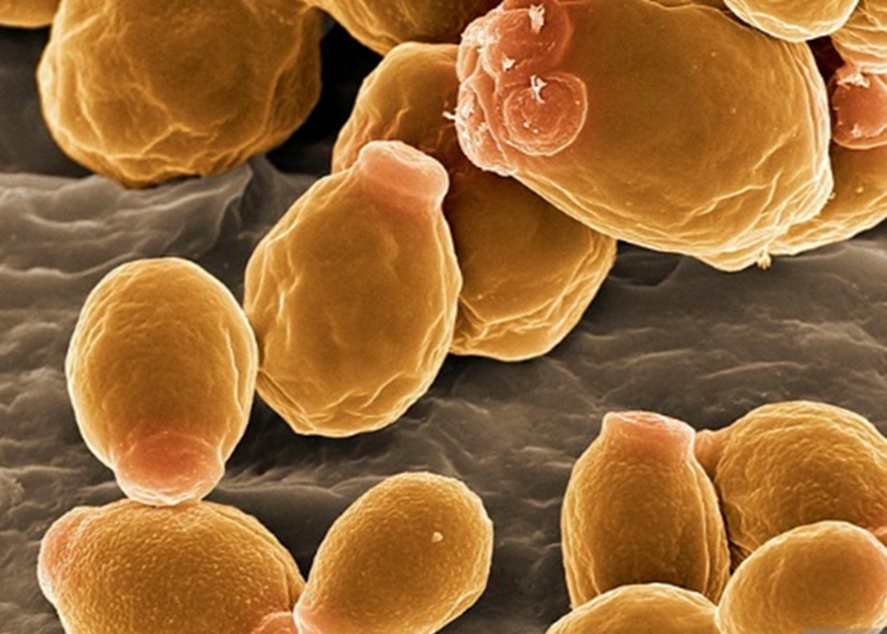
Photo: Yeast spores, Getty Images
Shabbat Hagadol, 5786
Russ Resnik, UMJC Rabbinic Counsel
In synagogues around the world, the sermon for Shabbat Hagadol (the shabbat before Passover) usually focuses on preparations for the holiday ahead. It will doubtless be the same this year, with Shabbat Hagadol coming March 28, but our preparations may need some expansion amidst the current surge of antisemitism throughout Europe and North America.
Passover, of course, is communal, family-oriented, celebrating the great high point of the Jewish story. But Passover entails a personal dimension as well: “In every generation,” says the Haggadah, “a person ought to look on himself as if he came forth from Egypt.” So, preparations for Passover include outward, familial steps—including the well-known (if not so well-loved) tradition of cleansing the home of all leaven or chametz—as well as inward preparation. Guidelines for our preparation are given in the account of the first Passover in Exodus 12.
14 “This day shall be for you a memorial day and you shall keep it as a feast to the Lord; throughout your generations, as a statute forever, you shall keep it as a feast. . . . 18 In the first month, from the fourteenth day of the month at evening, you shall eat matzot until the twenty-first day of the month at evening. 19 For seven days no leaven is to be found in your houses. . . . 20 You shall eat nothing leavened; in all your dwelling places you shall eat matzah. (ESV modified)
Verses 19–20 reiterate two aspects of the preparation: Negative—remove leaven, chametz, from your homes; and Positive—eat unleavened bread, matzah.
Outward preparation, then, includes the removal of chametz, which includes all products containing the five grains of biblical times: wheat, barley, spelt, rye, and oats. In later times Ashkenazi Jews also came to prohibit kitniyot—including legumes, rice, peanuts, and corn—but Sephardic custom permits these. The ban on chametz traditionally includes ownership: chametz products must be discarded, given away, or sold to a gentile (although it’s permissible to buy them back after Passover).
But why do we focus on removal of grain and grain products when the Torah just bans leaven? Because yeast spores are in the air around us and will alight on any grain that’s present and leaven it. Both the Talmud and the B’rit Chadasha speak of leaven as a metaphor for sin or the “evil inclination,” in a deep insight into the pervasiveness of sin and its corrupting nature. This is where preparations for Passover must be personal and inward, as well as outward and communal. When all the chametz is removed from your possession, it’s customary to recite a nullification: “All chametz in my possession [even if I missed it], may it be annulled and made ownerless, like the dust of the earth.” At some point an additional, more personal annulment was added to the prayer:
Just as I have ridden the chametz from my house and all I possess, may it be pleasing in your sight, Lord our God and God of our Fathers, to rid me of the Evil Inclination, and to rid all wickedness from the land (earth).
So, we don’t eat or even own chametz, but we do eat matzah, “the bread of affliction [or humility],” which reminds us that we were once afflicted by sin and death, and only God in his mercy could set us free. Just as we are dependent on bread for our sustenance, we remain humbly dependent on God’s undeserved kindness for our redemption, and we gladly affirm this dependency every Passover.
Paul captures the spiritual implications of both negative and positive, outward and inward, commandments, as he admonishes the Yeshua-followers in Corinth.
For indeed Messiah our Passover was sacrificed for us. Therefore, let us keep the feast, not with old chametz, nor with the chametz of malice and wickedness, but with the matzah of sincerity and truth. (1 Cor 5:7–8 CJB)
Passover this year comes amidst a surge of antisemitic activity throughout Europe and North America. Just this week a despicable act of Jewish hate fell upon us in London, in the early hours of Monday morning. According to combatantisemitism.org, police are “investigating a suspected antisemitic attack after a group of assailants set fire to four ambulances operated by Hatzola Northwest outside a synagogue.”
Hatzola Northwest provides rapid, volunteer-based emergency medical care in the area, operating around the clock and free of charge. Its teams are often first to arrive in critical situations.
The attack did not only destroy vehicles. It directly targeted a Jewish emergency service built to save lives.

This reprehensible attack is just one example of the current spike in antisemitic activity of which you all are doubtless aware. In response, may I suggest another form of chametz that we must clean out this year? I’m thinking of fear and intimidation. It may be normal to be anxious as we’re bombarded with reports of antisemitic violence. But the Survivors’ Haggadah (published in 1946 for Jews still in European DP camps observing their first Passover after World War II) declares, “The seder is a protest against despair.” We can be aware of the pervasive hatred around us and still clean out the residue of fear and despair that it leaves behind. We can speak up when we hear antisemitic remarks in everyday social settings, in person (always the best); online, although algorithmic silos often hamper real communication; in letters to the editor or governmental figures or whatever public forum is available. We can join protests and rallies out on the street.
The good news is that simply keeping the tradition of Passover in solidarity with the entire Jewish community, both worldwide and right where we live, is itself a vital step in countering antisemitism. We need to be wise in our behavior, but this is no time to keep our Jewishness in the closet. Instead, as the Torah declares in an additional positive command, Remember!
This day shall be for you as a memorial and you shall keep it as a feast to the Lord; throughout your generations, as a statute forever (Exod 12:14 ESV).
Then Moses said to the people, “Remember this day in which you came out from Egypt, out of the house of slavery. . . . (Exod 13:3).
The Haggadah amplifies this whole picture:
In every generation a person ought to look on himself as if he came forth from Egypt.
As it is said: “And you shall tell your son in that day saying, It is because of what the Lord did for me when I came forth from Egypt.” (Exodus 13:8).
It was not only our fathers that the Holy One, blessed be he, redeemed, but us as well he redeemed along with them.
Therefore we are duty-bound to thank, praise, glorify, honor, exalt, extol, and bless him who did for our forefathers and for us all these miracles. He brought us forth from slavery to freedom, anguish to joy, mourning to festival, darkness to great light, subjugation to redemption, so we should say before him, Hallelujah!
This, my friends, is proper remembrance. “The seder is a protest against despair.” That’s exactly right today in the spring of 2026, as we remember through retelling and reliving the story of our deliverance from Egypt, and our deliverance from bondage and despair through the resurrection of Messiah Yeshua during this very season.
So, as we prepare for Passover in the year of 5786, we can prepare in rejoicing and hope, because Messiah our Passover has been sacrificed for us. “Therefore, let us keep the feast, not with old chametz, nor with the chametz of malice and wickedness, but with the matzah of sincerity and truth.”