
Passover 5786
Rabbi Barney Kasdan, UMJC President
Oy vey! What tumultuous times we are living in! Right when it seems that we hit a new low, there seems to be another one. Whether it be the troubling war in the Middle East, the shaky economy in the USA, or the increasingly ugly presence of antisemitism, there seems to be no shortage of things to worry about. Many people consequently have hit new lows of anxiety and despair.
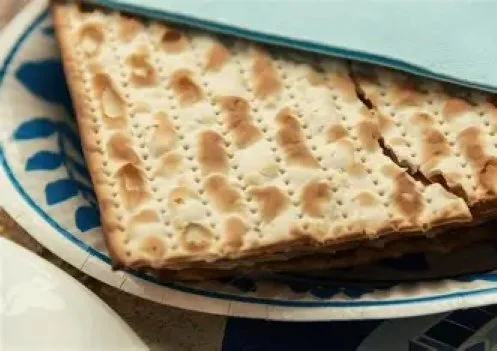
This sounds like the perfect time for a Seder! It is always a blessing to gather with family and friends for this most ancient religious observance among humanity. Alongside the delicious dinner is a Seder plate which displays the important reminders of our redemption from slavery. There’s a shank bone of a lamb, recalling the original sacrifice, as well as the bitter herbs and sweet haroset to remind us of both the bitterness of slavery and the sweetness of freedom. There is also a conspicuous container for three pieces of matzah called the Matzah Tash. The more one contemplates this unusual religious element, the more mysterious it becomes.
We could ask, as we do of the various other elements, “What is the meaning of these three separated matzahs in the one container?” In the traditional Haggadah there is no lengthy explanation for this universal custom although it is certainly a vital element of the Seder. One interpretation is that the three pieces of unleavened bread represent our forefathers; Abraham, Isaac, and Jacob, who are our distinct yet united as one. Another interpretation suggests that perhaps the three matzahs represent the three classes of the Jewish people; Cohen, Levi, and common people of Israel, united is one. While these interpretations are worth considering, there are still more mysterious elements about the Matzah Tash and especially the middle matzah.
Towards the beginning of the Seder, it is the middle matzah which is removed from the Matzah Tash and becomes a special focus of the dinner. Without explanation that middle matzah is broken in half with one half going back into the container while the remaining half becomes a special focus called the Afikomen. This broken matzah is then wrapped up or placed in an afikomen bag and hidden away while all the guests close their eyes. The afikomen will thus remain hidden until the end of the Seder when it makes a surprise return after there is a search for it.
This part of the ceremony leads to more questions. Why the special focus on the middle matzah? Why is Isaac removed and broken? Why would the Levites be hidden away? There are other interpretations that actually make a lot more sense. Rabbi Dr. Ron Wolfson of American Jewish University points out the following:
The step of the Seder where the afikomen is found and redeemed is called Tzafun, literally "hidden." This is a "hiding" which will ultimately be discovered. This is a "hiding" which foreshadows the future. In the future, something now in hiding will make complete that which is now incomplete. This is a foreshadowing of the Messiah, establishing that we not only celebrate the Passover of the past, but the Passover of the future. (The Passover Seder, p. 103)
This interpretation regarding the Messiah resonates with those of us in Messianic Judaism. Messiah is to be broken for our transgressions and buried for a season according to the Tanakh, yet it is predicted that he will also reappear after a short period of time (see Isaiah 53). A careful reading of the New Testament seems to confirm that it was this afikomen that Yeshua shared with his Jewish disciples at that famous last Seder. Although he would be broken at this season, there is great hope, as he would also reappear in resurrection—an event that would change the course of world history to this day. A testimony to this reality is the millions of believers from various tribes and tongues who will be celebrating this resurrection hope during this holiday week, including a significant number of us Jewish Yeshua-followers at our seders.
So, we come to Passover 5786 and the challenges of our current day. We will continue to pray and work for a lasting peace throughout the Middle East. May this Passover be a time of renewal and refreshment with family and friends. May it also be a time of optimism and hope as we contemplate the messianic symbolism of the afikomen. As Yeshua himself affirmed at that last Seder: "In the world you will have tribulation (tzuris) but take heart; I have overcome the world" (Yochanan / John 16:33).