

Torah Commentary
Thankfulness is the Thing
Our parasha includes a famous passage: “So you will eat and be full, and you will bless Adonai your God for the good land He has given you” (Deuteronomy 8:10). This verse displays a specific order: we are commanded to eat first, then be satisfied, and then bless the Lord for all the good land, Eretz Yisrael, He has bestowed upon us.

Parashat Ekev, Deuteronomy 7:12–11:25; Haftarah, Isaiah 49:14–51:3
Joe Miterko, Kol Mashiach, Melbourne, Florida
Then it will happen, as a result of your listening to these ordinances, when you keep and do them, that Adonai your God will keep with you the covenant kindness that He swore to your fathers. He will love you, bless you and multiply you. He will also bless the fruit of your womb and the produce of your soil, your grain and your new wine and your oil, the increase of your herds and the young of your flock, in the land that He swore to your fathers to give you. (Deuteronomy 7:12–13)
But Zion said: “Adonai has forsaken me, Adonai has forgotten me.” Can a woman forget her nursing baby or lack compassion for a child of her womb? Even if these forget, I will not forget you. Behold, I have engraved you on the palms of My hands. Your walls are continually before Me. (Isaiah 49:14–16)
In both the Torah and Haftarah readings, we see even in the first few verses the Lord’s burning desire to bless His people Israel. Moshe says that God will love us, bless us, and multiply us. Isaiah illustrates that He will not forget about us. Both display a beautiful picture. God wants us to prosper, and His desire is that we receive good gifts from Him. No matter what, He will guide his people through it all.
We see this intense desire of Hashem wanting to bless His people all throughout the Scriptures. The psalmist pens, “The earth has yielded its harvest—God, our God will bless us. God will bless us, and all the ends of the earth will fear Him” (Psalm 67:7–8). In the Brit Chadasha, Paul writes, “Blessed be the God and Father of our Lord Yeshua the Messiah, who has blessed us with every spiritual blessing in the heavenly places in Messiah. He chose us in the Messiah before the foundation of the world, to be holy and blameless before Him in love” (Ephesians 1:3–4).
Because God so desires to bless us, we ought to be the most thankful people in the world.
Birkat HaMazon: Thankfulness Every Day
Our parasha includes a famous passage: “So you will eat and be full, and you will bless Adonai your God for the good land He has given you” (Deuteronomy 8:10). This verse displays a specific order: we are commanded to eat first, then be satisfied, and then bless the Lord for all the good land, Eretz Yisrael, He has bestowed upon us. Because of this sequence, our sages introduced a set order for prayer after the meal. This is where the Birkat HaMazon (Grace after Meals) comes into play.
The Birkat HaMazon thanks God for all the provision He has given. It is not just for the food on the table, but includes beautiful details of the Land, the rebuilding of the Temple, and the ultimate reign of King Messiah. When recited in full, it can take twenty minutes or so. Many congregations will take on at least the first blessing, which says:
Praised are You, O Lord our God, Ruler of the universe, who feeds the whole world with goodness, with grace, with lovingkindness and mercy; God gives food to all creatures, for God’s mercy is everlasting. Through God’s abundant goodness we have never yet been in want; may we never be in want of sustenance for the sake of God’s great name. God nourishes and sustains all beings and does good to all, and provides food for all the creatures whom God has created. Praised are You, O Lord, who provides food for all. (Translation: Sefaria.org)
Birkat HaMazon and the Apostles
Did the followers of Yeshua interact with the Grace after Meals? According to the Didache, a second-century collection of sayings of the Apostles, they recited something like it after they ate. Didache Chapter 10 states, “But after you are filled, thus give thanks.” The blessing includes the following, “You gave food and drink to men for enjoyment, that they might give thanks to You; but to us You freely gave spiritual food and drink and life eternal through Your Servant.” Consistent with the Torah, the early followers of Yeshua obeyed this commandment.
Paul also interacts with some form of Birkat HaMazon as he tells the Corinthians,
You cannot drink the cup of the Lord and the cup of demons. You cannot partake of the table of the Lord and the table of demons. . . . If I partake with thankfulness, why am I denounced because of something I give thanks for? Therefore, whether you eat or drink or whatever you do, do all to the glory of God.” (1 Corinthians 10:21, 30–31)
This full chapter discusses the centrality of table fellowship. Do not eat, or give thanks, with bad company. Rather, treat the table as a holy altar. Be thankful. Be faithful to the Lord even with eating and drinking.
Gratitude Until the End
Our haftarah reading is the second of seven Haftarot of Consolation. After the tragic day of Tisha B’Av, when we remember both Temples falling and numerous atrocities that struck our people, these readings are meant to provide consolation and healing to Israel. Our portion this week ends with these verses:
“Listen to Me, you who pursue justice,
you who seek Adonai.
Look to the rock from which you were hewn,
and to the quarry from which you were dug.
Look to Abraham your father
and to Sarah who bore you.
For when I called him, he was but one,
then I blessed him and multiplied him.” For Adonai will comfort Zion.
He will comfort all her waste places.
He will make her wilderness like Eden,
her desert like the garden of Adonai.
Joy and gladness will be found in her,
thanksgiving and a sound of melody. (Isaiah 51:1-3)
We see again God’s deep desire to bless His people through Abraham. The covenant established through Abraham’s seed is unbreakable. We also see that Zion will be redeemed at the end of days filled with joy, gladness, melody, and thanksgiving. Even in Isaiah’s vision of a restored Jerusalem, we will be giving thanks to God for all that He has provided.
Thankfulness is the Thing
According to neuroscientist Dr. Caroline Leaf, we make around 35,000 decisions each day. Some of these decisions are automatically made through cultivated habits. Others are made to reduce decision fatigue (the fear of too many choices). Still others can be learned and ingrained by a fascinating quality called neuroplasticity. This function allows the brain to change and adapt to new circumstances.
Being grateful for what we have is an everyday choice we must make. Will we acknowledge HaShem for all the blessings He gives us? Or will we boast in ourselves, rejecting his good council?
Let us remember the good the Lord has done for our ancestors and the Good News of shalom and joy Messiah Yeshua has brought us. Let us always give thanks to the One who is worth thanking.
Nodeh Lecha—We thank you!
All Scripture references are from the Tree of Life Version, TLV.
Tisha B’Av: Why We Mourn
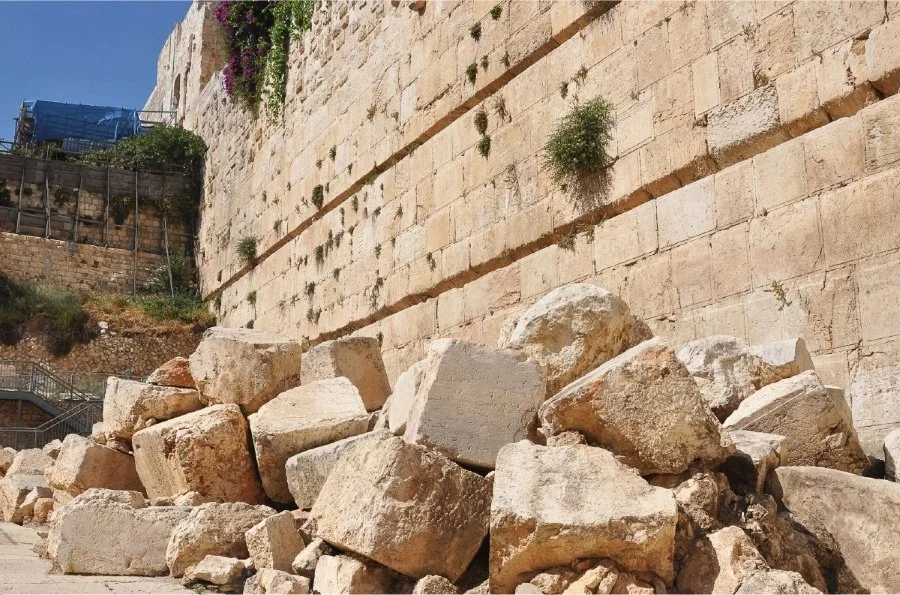
Tisha B’Av (July 22–23 this year) is a day of fasting on which we commemorate the destruction of the two Temples and many other calamities that have befallen our people over the centuries. I am sometimes asked why Messianic Jews should still observe this day since we have the risen Messiah.
Tisha B’Av 5786/2026
Rabbi Isaac Roussel, Chavurat Zera Avraham, Ann Arbor, MI
We are at the conclusion of the Three Weeks leading up to Tisha B’Av (July 22–23 this year). The Ninth of Av is a day of fasting on which we commemorate the destruction of the two Temples and many other calamities that have befallen our people over the centuries.
This day often goes unobserved in the non-Orthodox world. Some say that since we now have the State of Israel there is no need to mourn over a Temple destroyed 2,000 years ago. Others say that the destruction of the Temple pales in comparison to the horrors of the Holocaust. There are some more liberal-minded Jews who even celebrate the destruction of the Temple because it means that we no longer have animal sacrifices.
I am sometimes asked why Messianic Jews should still observe this day since we have the risen Messiah. While I could go into many different reasons, my response to this question is fourfold.
First, we mourn because the world is not yet fully redeemed. The question above is rooted in a common misunderstanding of Yeshua’s death and resurrection. People tend to think that with his resurrection all is complete. In fact, this was just the beginning of redemption. Yes, Yeshua died, rose, and ascended to the Father’s right hand, but we still live in a fallen world. There is still poverty, suffering, disease, violence, and sin. Full redemption does not occur until his return. Rav Shaul says, “We know that until now, the whole creation has been groaning as with the pains of childbirth; and not only it, but we ourselves, who have the firstfruits of the Spirit, groan inwardly as we continue waiting eagerly to be made sons” (Romans 8:22–23).
Second, we mourn because we ourselves are not yet fully redeemed. Our reading from the prophets this week is the second haftarah of admonition, from the book of Jeremiah. In it the Lord mournfully declares, “My people have committed two evils: they have abandoned me, the fountain of living water, and dug themselves cisterns, broken cisterns, that can hold no water!” (Jeremiah 2:13). This text is speaking to Israel’s idolatry, but we do this in many small ways on a regular basis ourselves. We take our eyes off the Lord to try to get what we want through our own efforts. We scheme, gossip, speak harshly, ignore others’ pain, and are consumed with pride. Though we have forgiveness through the Messiah, we are still not fully redeemed. Our sins contribute to the suffering of this world. This is why the Rambam says that we fast on this day to recall that our evil deeds and those of our ancestors have caused the destruction (Hilkhot Ta’anit 5:1). And, I would add, continue to cause destruction in our lives and the lives of those around us. Tisha B’Av is not just a time of mourning, but a time of teshuvah, repentance.
Third, we mourn because Israel is not yet fully redeemed. Our movement’s strong evangelical Christian roots influence us to think individualistically. This perspective is at the core of the question, “I have the Messiah, so why should I mourn the Temple’s destruction?” But the fact is that both Scripture and Jewish tradition have a different perspective. We are individuals, but we are part of a wider community, for whom we are responsible. Judaism is not an “I-Thou” religion, it is a “We-Thou” religion. This is why the vast majority of the prayers in our Siddur are written in the plural. This includes our confessions of sin. We may not have committed a particular sin, but a fellow Jew may have. Our community as a whole has sinned, and we are all responsible.
Yom Kippur is predominately focused on the individual before God. Rabbi Ismar Schorcsh, a former chancellor of the Jewish Theological Seminary, therefore, argues that this is why we need Tisha B’Av. He writes,
Yom Kippur and Tisha B’av are tandem. . . . Whereas Yom Kippur is set aside for self-reflection, Tisha B’av is dedicated to pondering the nation’s destiny. . . . To remove Tisha B’av from the liturgical structure is to accentuate the pursuit of personal salvation and to disrupt the carefully crafted equilibrium between individual need and group primacy.
We need both individual and corporate repentance. While we may have found the Messiah, our people by and large have not. We are a part of them and they are a part of us, therefore we need to focus on our joint destiny.
Finally, we mourn because God mourns. Both Scripture and our tradition repeatedly declare that God grieves over this broken world. Because we have a mutual destiny with God, we join in his sorrow over this unredeemed world. (And I believe that there is somber joy in sharing in his pain.) Our Sages understood that God suffers along with Israel and the world. The Talmud puts these words in God’s mouth, “Woe to the children, on account of whose sins I destroyed my house and burnt my Temple and exiled them among the nations of the world. . . . Woe to the Father who had to banish his children!”
One of my favorite interpretations of the Mourner’s Kaddish is based on this passage. Not only are we seeking God’s comfort in the loss of a loved one, but we in turn comfort God in that he has lost a child from the world too. Kaddish is therefore not just for the individual, but for the community to comfort God! I find this poignant and beautiful. There is something holy and sacred about sharing in God’s pain for the world.
Thus, I commend observance of Tisha B’Av to you. Yes, as Messianic Jews, we have the risen Messiah. But we still live in a world of poverty, disease, war, and oppression; a world that destroys temples. We ourselves contribute to this through our own sinful behavior. We are part of a people that is often far from God and desperately needs Messiah Yeshua. And we can join our weeping with God’s over this broken and unredeemed world.
The destruction of both Temples stands as a sign for all the destruction that exists in the world.
May the groans of our liturgy resonate with the groans of all Creation.
May our fast call us to teshuvah, repentance—repentance for our own sin that brings destruction into this world.
May we mourn for our people, who sometimes live lives far from God.
May we, amid our own mourning, comfort our Father, who weeps over his burnt House and the exile that not only Israel but the whole world experiences.
And thereby, we can bring healing to this world and speed the final redemption!
Start Over from the Beginning
Whatever our pasts, whether we leave the depths of Egypt or the heights of Mt. Sinai, we are offered a new beginning of our own – a chance to turn and get moving toward the future God has prepared for us.

Parashat Devarim, Deuteronomy 1:1 – 3:22
Rabbi Adam Landsman, Beit Hashofar, Seattle
This week, we begin the book of Deuteronomy, a name derived from the Greek for “second law.” It is called Devarim in Hebrew, which means “Words.” Both names fit well. At the end of his life and the era of his leadership, Moses took it upon himself to review the Torah, a second run through the laws that Hashem had given his people.
Over the last four decades, Moses led the people out of Egypt and through the Red Sea to receive the Torah at Sinai, then across the desert for thirty-eight years to arrive at the bank of the Jordan, on the cusp of entering their land. He will not be going with them. Devarim is his last words, the last message he can send with them to start their new life in the land. At his complete ending, Moses starts over at the beginning, but not with the beginning we might expect.
Where to Start?
Moses begins recounting his leadership of Israel.
Adonai spoke to us in Horev. He said, “You have lived long enough by this mountain. Turn, get moving and go to the hill-country of the Emori. . . . I have set the land before you! Go in, and take possession of the land Adonai swore to give to your ancestors” (Deuteronomy 1:6–8 CJB).
This is a moving call, but it is the wrong place to start the story! What is Moses doing?
We all know that Moses’s story started on the banks of the Nile and B’nei Yisrael’s story started with the Ten Plagues and the Exodus on Passover. This generation’s story started forty years before the opening of Devarim, on Tisha b’Av, after their parents’ generation listened to the ten spies and shied back from Hashem’s command to enter the land (Numbers 14), ensuring that the ones standing before Moses forty years later would be the ones to enter the land. One could even start the story on the first Shavuot, when the Children of Israel first received the Torah and then constructed the Tabernacle so that Hashem had a dwelling-place among them.
Moses does not start with any of these obvious points. He picks a day that is not marked on our calendars, that happens rather unceremoniously in Numbers 10. It is the day that God decided that it was time for the people to get moving from Mount Sinai. Moses’s beginning sets up the Exodus and even receiving the Torah as a prologue, background knowledge that the people do not need to focus on at this moment. For the generation entering the land, the real work of being God's people begins after the mountaintop experience.
Where Are You Headed?
Moses does not want the people to get started by thinking of themselves as the first generation, though we are to remember that we were freed from Egypt and that the Torah was given to us (Deuteronomy 6:20–25). Instead, this generation is given a new start as the doers of Hashem’s commands. Rather than escaped slaves or an unformed nation, Moses’s framing casts them as a people ready to move, as those who act according to the Torah. The rest of the book of Devarim makes it clear that Moses wants to establish this idea as the core of their path going forward. He spends the rest of the parashah recounting the Israelites’ journey to the spot where they are as he speaks to them, but he continues by saying, “Now, Isra’el, listen to the laws and rulings I am teaching you, in order to follow them, so that you will live” (Deuteronomy 4:1). This refrain appears throughout Devarim, including in the texts that comprise the Shema.
This is an important shift in the identity of Israel. Just over forty years prior, the descendants of Jacob were slaves without a future until Hashem brought them out of Egypt as a free people and restored their direction. They moved from slavery and deprivation to freedom and providence, and their story from Passover to the rebellion of the spies can be described as the story of forming and organizing a new nation.
Moses shifts the new generation’s focus away from where they came from to where they are headed. Their story starts in the same way as Abraham’s – God telling them to go – and it grows from that first order. It is the process of obeying Hashem’s commands and following his will. Since the Exodus happened before their story started, they will not have the constant complaining refrain of “when we were in Egypt. . .” Instead, they are repeatedly told “when you go into the land. . .” Everything is focused on what they will do in obedience to God. This sets the whole arc of their identity, from their beginning to their future, on a pathway for success.
Start Over from the Beginning
Questions of identity, beginning, and direction are just as important for us today as they were for our ancestors. “Messianic Jew” is an identity that constantly faces disapproval and derision – many are quick to tell us all about how we’re headed in the wrong direction and leaving from the wrong place. Thankfully for us, our identity has a firm foundation in a new beginning.
New beginnings are a core element of Yeshua’s mission and our discipleship in him. “Through immersion into his death we were buried with him; so that just as, through the glory of the Father, the Messiah was raised from the dead, likewise we too might live a new life” (Romans 6:4). He came to bring renewal, repentance, and new direction, and through his life, death, and resurrection, we can participate in his renewed Kingdom of Heaven and bring that newness into our own lives.
When we commit to Messianic identity and practice, we commit to a new journey. It is a call to leave familiar ideas, habits, and worldviews and strike out across the desert, to leave what we know in pursuit of Hashem’s commands and promises. Even if we have been following a path for forty years, we can take heart that our new beginning has set us on a pathway to all of Messiah’s promises. Whatever our pasts, whether we leave the depths of Egypt or the heights of Mt. Sinai, we are offered a new beginning of our own – a chance to turn and get moving toward the future God has prepared for us. Don’t let your prologue define you, but be shaped by the calling of Hashem.
Miklat! Miklat!
The Torah restrains vengeance and establishes justice. The Prophets call Israel to embody righteousness with compassion. Messiah carries that same calling into the hidden places of the heart, where anger, pride, bitterness, and hatred first take root. God’s purpose has always been to form a people who bear his likeness.

Parashat Matot–Masei, Numbers 30:1–36:13
Rabbi Paul L. Saal, Congregation Shuvah Yisrael, West Hartford, CT
Justice Begins with Mercy
One of the most persistent misunderstandings of Scripture is the belief that the Torah reveals a God of judgment while the Besorot (Gospels) reveal a God of grace. Few portions challenge that misconception more clearly than Matot-Masei. As Israel stands poised to enter the Promised Land, before cities of commerce are established, before military fortifications are built, and before political institutions are organized, the Holy One commands that Cities of Refuge be established. Before Israel learns how to defend herself, she must first learn how to show mercy.
This ordering is no accident. The Torah is not merely a legal code but God’s gracious instruction, teaching his covenant people to move beyond humanity’s instinct for vengeance and become a community marked by justice, compassion, and holiness. The Cities of Refuge (Num 35:9–15) were virtually without parallel in the ancient Near East. Rather than allowing an endless cycle of blood vengeance, the Torah provided sanctuary for one who caused death unintentionally until justice could be rightly discerned. Even the familiar phrase, “an eye for an eye,” was never permission for personal revenge, but a limit upon vengeance, ensuring that justice remained measured and proportionate.
It is equally significant that these cities were entrusted to the Levites. Those who ministered before God also became guardians of mercy. Justice in Israel was never to be driven by uncontrolled emotion, but administered within a covenant community reflecting the character of its God. Vengeance belonged to the Holy One. His people were called to pursue justice tempered by mercy.
A Place to Rest
There is another beautiful irony hidden within this portion. The Cities of Refuge appear in Masei, the account of Israel’s forty-two wilderness journeys. For forty years Israel herself had been a people on the move, learning to trust God one campsite at a time. Now, as they prepare to settle permanently in the land, God commands them to establish places where others may stop running.
Every journey toward holiness requires places of refuge. God’s purpose was not simply to bring Israel into the land, but to form a people who reflected his own character. Before Israel could become a light to the nations, she first had to become a community where mercy restrained vengeance and truth was given room to emerge.
That calling has never changed. Our congregations are likewise called to become places of refuge. People arrive carrying grief, shame, broken relationships, disappointments, and burdens invisible to everyone else. The synagogue must never ignore sin, but neither should it become a place where wounded people fear to seek healing. Often, before we can continue walking with God, we need a place where grace allows us to catch our breath.
The rabbis beautifully expanded this vision. The Mishnah teaches that the roads leading to the Cities of Refuge were carefully maintained and clearly marked with signs reading, Miklat! Miklat! “Refuge! Refuge!” (Makkot 2:5). Rashi explains that bridges were repaired, roads widened, and every obstacle removed so that no one seeking safety would lose precious time. Mercy was never intended to be difficult to find.
That image should challenge every congregation. Are we making it easier for people to find God’s mercy, or harder? Have we placed obstacles in the road through pride, suspicion, gossip, unforgiveness, or harshness? Long before people hear our theology, they encounter our spirit. The question is whether that encounter points them toward refuge or away from it.
Justice and Mercy
Another remarkable detail is easily overlooked. The Torah explicitly says these cities were to serve “the Israelites, the ger, and the resident among them” (Num 35:15). The protection of justice extended beyond native-born Israelites. The ger, often translated “sojourner” or “resident alien,” was also entitled to refuge and due process.
This principle echoes throughout the Torah. Israel is repeatedly reminded that she was once a stranger in Egypt and therefore must not oppress the stranger living within her gates (Exod 22:21; Lev 19:33–34; Deut 10:18–19). The Torah never asks Israel to abandon justice, nor to forget mercy. Holding those responsibilities together has never been easy, but every discussion concerning immigration is ultimately a discussion about people created b’tzelem Elohim, in the image of God.
The principle extends far beyond immigration. Every generation wrestles with balancing accountability and restoration, justice and compassion. No legal system is perfect, yet Scripture continually calls every society toward justice without partiality, mercy without favoritism, and dignity for every person created in God’s image. That responsibility begins long before we influence governments. It begins in the ordinary ways we treat one another.
Becoming Cities of Refuge
What, then, is our personal responsibility?
The Torah was never intended to remain an ideal embodied only in Israel’s institutions. It was to be lived in the daily conduct of God’s people. Each of us is called to become, in a very real sense, a small city of refuge for those around us. We cannot erase the consequences of another person’s choices, nor should we excuse genuine wrongdoing. Yet we can refuse to become instruments of unnecessary shame, humiliation, or vengeance. We can become people whose presence reflects the character of the God we worship.
That calling may be more difficult today than ever before. We live in an age when reputations can be destroyed in hours, outrage often spreads faster than truth, and disagreement too frequently becomes permanent estrangement. Social media has made communication effortless, but it has also made condemnation effortless.
The Torah invites us to ask searching questions of ourselves. Am I being harsh or judgmental? Am I trying to remove the speck from another person’s eye while my own vision remains clouded (Matt 7:3–5)? Am I helping to restore a brother or sister, or merely adding another stone to the pile? Perhaps the deepest question is whether others experience me as a place of refuge. Do people leave my presence more aware of God’s mercy or more burdened by my criticism?
Of course, mercy must never be confused with permissiveness. The Cities of Refuge did not abolish justice. They delayed vengeance until justice could be rightly discerned. The Torah neither excuses sin nor encourages revenge. Instead, it creates space where truth, repentance, and justice may flourish together.
Our generation wrestles with difficult questions involving criminal justice, addiction, mental illness, homelessness, immigration, and the restoration of those who have failed publicly. Faithful people may disagree about public policy, and these matters deserve careful thought, humility, and wisdom. Yet the Torah reminds us that justice without compassion becomes cruelty, while compassion without moral clarity becomes license. God’s people are not called to choose one over the other. We are called to hold both together, reflecting the character of the Holy One Himself.
The best place to begin is with our own lives. No legislation is required for kindness. No government can compel humility, patience, forgiveness, or gentleness. Every act of mercy becomes a testimony to the God we serve, and every relationship offers another opportunity to demonstrate that justice and compassion are not enemies but companions.
Mercy Fulfilled
When Yeshua ascended the mountain to teach, he did not diminish the Torah. He revealed its deepest intention.
You have heard that it was said to those of old, “You shall not murder. . .” But I say to you that everyone who is angry with his brother shall be liable to judgment. (Matt 5:21–22)
The commandment had always aimed at more than outward behavior. Murder begins long before violence is committed. It begins in the heart that nurses resentment, contempt, and anger. Yeshua calls his disciples beyond outward obedience to the transformation of the inner life.
Throughout the Besorot, Yeshua repeatedly extends forgiveness to those who seek him, yet his mercy is never separated from repentance. To the woman caught in adultery he says, “Neither do I condemn you. Go, and from now on sin no more” (John 8:11). Mercy is not permission to remain unchanged. It is God’s gracious invitation to become the people we were created to be.
From Sinai to Messiah, the story remains remarkably consistent. The Torah restrains vengeance and establishes justice. The Prophets call Israel to embody righteousness with compassion. Messiah carries that same calling into the hidden places of the heart, where anger, pride, bitterness, and hatred first take root. God’s purpose has always been to form a people who bear his likeness.
The Sages likewise remind us that just as the Holy One shelters the vulnerable, so his people are called to imitate his ways. The covenant community is not merely a gathering of those who believe the right things. It is a people whose life together reflects the mercy of the God who dwells among them.
Miklat! Miklat!
As Israel completes the journeys of Massei and prepares to hear Moses’ final words in Devarim, the Torah leaves us with one enduring image.
Miklat! Miklat! “Refuge! Refuge!” (Makkot 10a).
Before Israel could become a light to the nations, she first had to become a people of refuge. Before others could learn of the God of Abraham, Isaac, and Jacob, they had to encounter a community where justice and mercy walked hand in hand, where truth was joined to compassion, and where even the vulnerable stranger found protection beneath the covenant.
Perhaps that remains the measure of every Messianic Jewish congregation today.
Our calling is to become those signposts. Long before people find refuge in our synagogue, they should encounter refuge in our words. Before they experience God’s mercy in our worship, they should discover it in our homes. Before they hear us teach about grace, they should recognize it in the way we forgive, encourage, and bear one another’s burdens.
The world already has enough voices pointing toward condemnation. May we become a people who point instead toward the mercy of God. May weary travelers find rest among us. May strangers discover a home among us. May those who have stumbled encounter both truth and grace among us.
And may every road leading to our congregation be clearly marked with the same invitation that once stood at the crossroads of ancient Israel:
Miklat! Miklat!
Refuge! Refuge!
Zeal is the Deal
As we see throughout our texts, zeal can take on a wide variety of forms. It does not mean one must go and pick up a spear . . . consult your local rabbi before doing this! Every moment of every day is a great moment to ask how we can take a stand for Hashem through our actions.
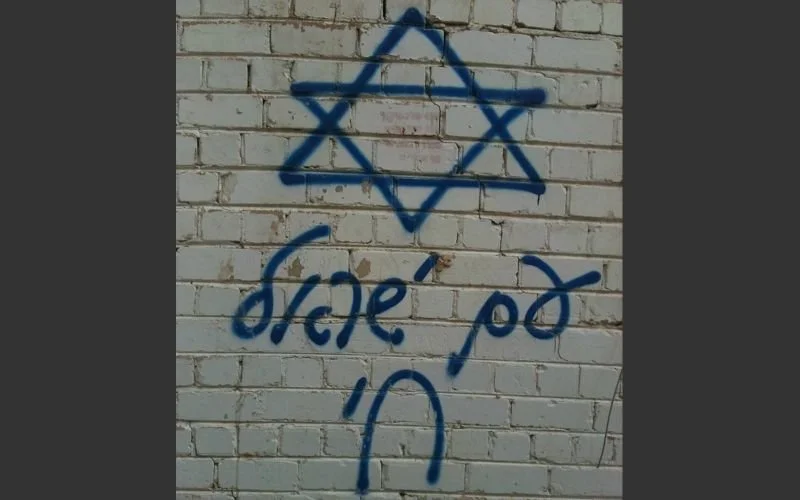
Am Yisrael Chai - The People Israel Lives!
Parashat Pinchas, Numbers 25:10-29:40; Haftarah, Jeremiah 1:1-2:3
Joe Miterko, Kol Mashiach, Melbourne, FL
Darkness and Light
We are entering the period of the Hebrew calendar known as the Three Weeks. They begin on the 17th day of Tammuz, July 2 this year, a date marking the breaching of the walls of Jerusalem by the Romans in 69 CE. During this tragic time period, mourning rituals are observed, including no haircuts, weddings or reciting the blessing of Shehechiyanu. All joyous occasions, except for the weekly Shabbat, are prohibited. This time period culminates with the most tragic day of the Jewish calendar, the 9th of the month of Av (July 22-23). Numerous atrocities befell our people on this date, including the fall of the two Temples, first under the Babylonians in 586 BCE and again under the Romans in 70 CE.
As sad as these events are, they should fill us with zeal, especially considering October 7, 2023. We continually need to stand with Am Yisrael, the Jewish people, and not be afraid of the consequences. In a world that is increasing in antisemitism and rage, our “yes” and devotion to God speaks volumes. We are called to be children of light. Isaiah cries out to us, “Come house of Jacob, let us walk in the light of Adonai” (Isa 2:5). Paul also emphasizes to the Ephesians, “For once you were darkness, but now in union with the Lord you are light. Walk as children of light (for the fruit of light is in all goodness and righteousness and truth), trying to learn what is pleasing to the Lord” (Eph 5:8-10). We must emulate Yeshua, our light, and be zealous for him.
Zeal can take many shapes, forms, and sizes. Below are some examples from our texts. Each contains a hero, a promise, and a unique pathway to living with zeal:
A Covenant of Peace, A Spared Priesthood
This week’s parasha opens with our hero, Pinchas son of Elazar, Aaron’s grandson. The text picks up where portion ends. Israel is going after Moabite women, provoked by the wicked Balaam the diviner. He leads the whole camp to idolatry and severe disobedience toward the covenant. Disturbed greatly, Pinchas thrusts his spear into an Israelite man and Moabite woman in front of the whole camp, and the plague is lifted. Our parasha begins with these words:
Then Adonai spoke to Moses saying, “Phinehas son of Eleazar son of Aaron the kohen has turned away My anger from Bnei-Yisrael because he was very zealous for Me among them, so that I did not put an end to Bnei-Yisrael in My zeal. So now say: See, I am making with him a covenant of shalom! It will be for him and his descendants after him a covenant of an everlasting priesthood — because he was zealous for his God and atoned for Bnei-Yisrael.” (Num 25:10-13)
For Pinchas, the promise of an eternal priesthood must have brought a huge sigh of relief. This role was nearly stolen from him in Korach’s rebellion. Not only that, but this act of courage brought about atonement for the camp — the plague that killed 24,000 people lifted.
Young Pinchas was not afraid to act, and God was not afraid to answer him. In fact, according to some of our Sages, Pinchas is considered to be the same person as Elijah the Prophet. Not only are both described as being exceedingly zealous for the Lord through their actions, but we also do not read any account of their deaths. Indeed, Pinchas still ministers well into the period of Israel’s judges (see Judges 20:28). Whether they are the same person or not, Pinchas demonstrated his loyalty to Hashem and his commandments through his actions.
A Bold Request, A Spared Family
Later in our parasha, we encounter another act of bravery and zeal. Now the heroes are the five daughters of Zelophehad and the promise is a lasting inheritance. Numbers 27:1-11 records this account. Zelophehad had no son, so his daughters sent a request to Moses to see if they could obtain the family inheritance themselves. Moses brings this request before Hashem, and it is approved.
Can you imagine if the daughters did not ask for this inheritance? The family line could have ended, leaving them humiliated and ashamed. They stirred up courage to ask in this manner and received a good reward.
An Unlikely Prophet, A Spared Promise
Our haftarah speaks about another kohen who had quite an enormous task ahead of him. Our hero is Jeremiah the prophet. He lived in some of the darkest days of the kingdom of Judah, including a bitter exile. Yet, it is this unlikely young hero that Hashem chooses to deliver His word. Jeremiah is afraid and declares, “Alas, Adonai Elohim! Look, I don’t know how to speak! For I’m still a boy!” (Jer 1:6). He thinks that he is unfit and unqualified for this role because of his age. Nevertheless, Hashem said He would guide his mouth in what to say and who to speak with. In spite of his age, Jeremiah committed himself to a life of zeal, speaking God’s truth to Israel and the nations.
If Jeremiah did not take the position as prophet, then we would not have the extraordinary promise that Israel would return from Babylonian captivity and that God would once again have compassion on His people, allowing them to rebuild Jerusalem (see Jer 29). We also would not have the promise of a New Covenant in Jeremiah 31 had Jeremiah said no. Jeremiah had zeal to speak up in difficult times.
Our Yes to Yeshua
As we have seen throughout our texts, zeal can take on a wide variety of forms. It does not mean one must go and pick up a spear . . . consult your local rabbi before doing this! Every moment of every day is a great moment to ask how we can take a stand for Hashem through our actions.
An important act of submission for me was saying yes to teaching Hebrew at Ashreinu School. I often don’t see it when I’m teaching the little ones their Aleph Bet, but the school is a beautiful example of an act of zeal. The world does not want the light of followers of Yeshua, but here we are teaching from generation to generation.
As we turn to the Three Weeks, we mourn about our current state, but we ask God “where can I say ‘Yes’ to You? What is an act of zeal that I can commit to?” He wants us to share in His light and truth.
Thus . . . Zeal is the Deal.
Shabbat Shalom!
Scripture references are from the Tree of Life Version, TLV.
Divine Diplomacy
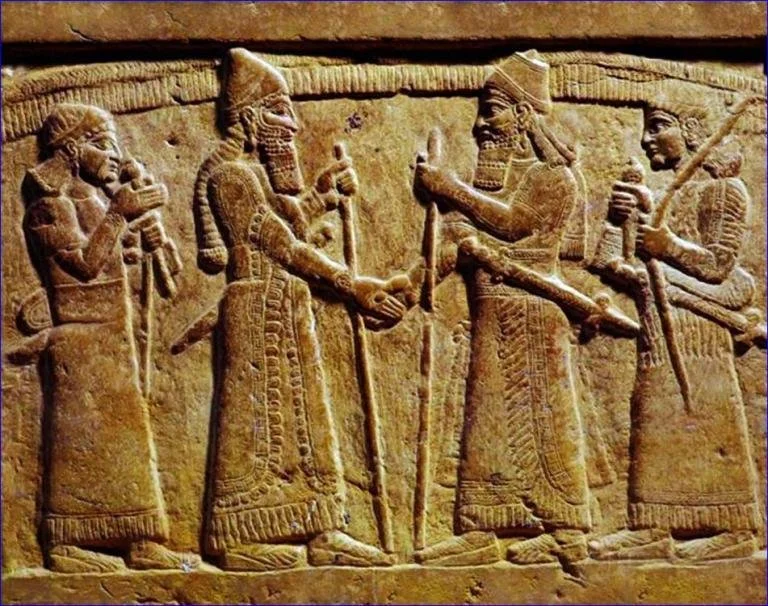
All of us would benefit from understanding the way Moses and the people employed negotiations during their journey across the land. Two different sections of land, two different communities, two different responses from the occupants of the land, and two very different outcomes.
Parashat Chukat-Balak, Numbers 19:1–25:9
Mary Haller, Tikvat Israel Congregation, Richmond, VA
Our double portion for this week is full of valuable history lessons that continue to be applicable for our lives today. Chukat contains instruction regarding purification rituals in the Red Heifer story. We can also learn from Moses as he initiates some first steps in negotiating principles in his dealings with Edom and Sihon.
As we continue to read and learn from this parasha, Moses’ struggles paint a clear picture of the human condition as it unfolds during the diplomatic process.
Learning from the interactions of ancient Israelites can help us appreciate how the community can either come together in unity with the Creator or experience division and strain when people pursue selfish gain without consideration for the greater good for the community.
Parashat Balak contains the story of the Moabite king who contracts the gentile prophet Balaam to curse the people Israel. Despite all the antics to thwart the Israelites through curses, God’s blessings prevailed.
As I took time to process this parasha, an important lesson stood out to me. This year 2026 has brought many things to the surface. I believe all of us would benefit from understanding the way Moses and the people employed negotiations during their journey across the land. Two different sections of land, two different communities, two different responses from the occupants of the land, and two very different outcomes.
Today we call it diplomacy. It is the lesson that humanity continues to struggle with in a major way. Diplomacy is a peaceful way that sovereign states, governments, and organizations conduct negotiations and build relationships. Through diplomatic processes humans can discuss situations, resolve conflicts through dialogue, and compromise to come to a conclusion that will be mutually beneficial to all involved.
Diplomacy is a process that requires all those involved to pack their patience. Throughout my adult life I have experienced successful negotiations that led to positive results as well as unsuccessful attempts at negotiation that birthed negative results.
For diplomacy to achieve positive results each person involved should enter into the process with the understanding that calm, clear, communication birthed out of kindness is a necessary investment. No matter the number of participants, no matter the reason for the negotiation, whether it is a family situation or a global effort toward peace a foundation of kind words and clarity is imperative.
Let’s see what Moses and the people Israel can teach us from their experiences with diplomacy crossing the land of Edom and Sihon. Initially we see that there are two different situations with two different outcomes.
In Numbers 20, beginning at verse 14, we read Israel’s plea to the king of Edom to cross their territory. Israel negotiates clearly and shows kindness by seeking permission to cross on their road:
“We will not cross through any field or vineyard or drink water from any well. But we will travel on the Kings highway.” Edom’s response follows: “You may not pass through me — or I will march out against you with the sword.” The Israelites respond politely out of kindness, “We will travel on the main road, and if we or our livestock even drink any of your water we will pay its price.” Again Edom responds, “You may not pass through!” (Num 20:17–20).
Edom came out with a show of military force and Israel turned away and proceeded to take the long way around Edom’s territory. In a brief examination one might assume that the negotiations had failed, but perhaps not. Israel presented their need and request, and it was denied. In response to the threat of war Israel made the decision to go another way.
As the journey continued, Israel reached another territory and again tried another attempt at a fair negotiation in a calm format. However, after their long and strenuous journey around Edom tensions were rising due to encounters with other peoples along the way as well as the death of Aaron.
In chapter 21 we read of Israel’s second attempt at diplomacy. Israel approaches the king of Sihon: “Permit us to pass through your land. We will not turn aside into any field or vineyard nor drink water from the wells. We will travel on the king’s highway until we have passed through your territory” (21:22). This is similar to the last negotiation with Edom, yet as we read through the chapter detailing the situation, we see it has very different results. This time Sihon’s entire army marched out to attack Israel. This time Israel did not turn and take another road. They stood and conquered all the land. This begs the question, why? As we read through the chapter we see more battles, and we soon read the reason behind this distinctly different outcome.
Adonai said to Moses, “Do not fear him. I have given him with all his people and his land into your hand.” (Num 21:34-35)
Moses and the people were upfront and clear with their request to cross the lands; they were willing out of kindness and fairness to offer compensation. This shows respect for what was not their own. They employed reasonable negotiation in their attempts at diplomacy.
This is what stood out to me. All we can do at any given time is to be responsible for our part in negotiating our way through life. We present clear intent with kindness and respect and act accordingly. The deeper lesson is the part where we come to know we are not alone. Adonai is with us and will direct our paths. As it was with Israel in the days of old, Adonai will provide when we do our human best to honor him by respecting his creation.
The Matter of Timing
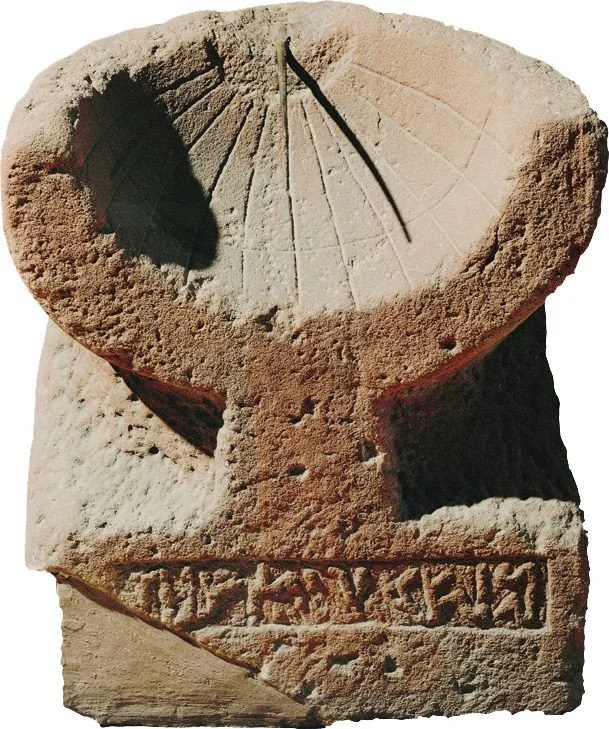
We measure our days in hours and moments, rushing from one thing to the next, yet the Creator moves with eternal purpose—never late, never early, always perfect. In the noise of life, it is easy to forget that his timing is not only different from ours … it is holy.
Parashat Korach, Numbers 16:1-18:32
Rachel Martins, Tikvat Israel, Richmond, VA
There is a rhythm to time that only God fully understands.
We measure our days in hours and moments, rushing from one thing to the next, yet the Creator moves with eternal purpose—never late, never early, always perfect. In the noise of life, it is easy to forget that his timing is not only different from ours . . . it is holy. But have you ever stopped to fully think about how God sees and uses time?
Our human minds, though created by him, cannot fully fathom the grandeur and holiness of our Creator. Yet, in His zealous love, He imparts glimpses of Himself through Scripture, Creation, and the love expressed within our community.
When we consider God’s timing, we should also recognize how He works all things for His glory. We see His hand not only in seasons of joy and redemption but also in times of profound sorrow and loss. While it can be difficult to understand how God could use tragedy for His glory, Scripture repeatedly shows that He is able to bring purpose and redemption even from humanity’s darkest moments. History continues to bear witness to this truth. Even in the midst of suffering, God can use seasons of pain to draw His people back to Himself.
In this week’s parasha, timing meets a devastating crossroads between human desire and God’s divine order, law, and boundaries. Korach, along with Dathan, Abiram, and On, rises up against Moses and Aaron, accusing them of going too far. Korach and his followers argue that “all the community is holy,” questioning why Aaron and his sons alone are chosen for the priesthood.
Many commentaries focus on the gravity of this rebellion—how opposing Moses, Aaron, and ultimately God Himself is a serious offense. But have you ever paused to consider where Korach came from? What position did he hold before his rebellion?
Korach was a Levite. According to a midrash in Bemidbar Rabbah 18.3 (some editions number it 18.2), he held a prominent role in carrying the ark with The Ten Commandments, as well as being the third eldest of the great-grandchildren of Levi after Moses and Aaron. He also had great wealth, requiring a caravan of 300 mules just to transport the keys to his treasure house.
In reality Korach could want for nothing, the Lord had provided for him, and yet it wasn't enough.
I would like to imagine that Korach started as someone who was zealous to do what is right in God’s eyes. He carried the ark of the covenant! He was blessed with flocks, herds, and leadership of men.
Yet somewhere along the way, he lost sight of the boundary between himself—a created being—and the eternal, all-knowing holiness of God. Korach seemed unable to recognize his human limitations or the divine order established by the holy Creator.
There is a fine line between pursuing God and attempting to assume a place that is not ours. That line is defined by who God was, who He is, and what He chooses to reveal in His timing.
Korach’s rebellion reminds us how easily jealousy, misunderstanding, and a sense of entitlement can cloud our understanding of God’s will. The phrase, “His timing is perfect,” brings comfort only when we are willing to surrender our own desires, expectations, and frustrations to Him. Korach is an example of the unfortunate consequences of rebellion but yet we discover in the coming chapters there is redemption for his sons (Num 26:11), who write a number of glorious Psalms.
To align ourselves with God’s timeline, we must remain focused on what He has placed before us today. As we await the footsteps of Messiah, we must not allow the busyness or darkness of this world to distract us from God’s eternal perspective of time. Korach did not understand and chose to question why Moses and Aaron were called to be set apart. Instead of stopping and trying to see through God’s vision and timeline he chose to be rebellious. Let us not forget why we are called to be set apart and fully trust in what God has for us even when we cannot see the full timeline.
Therefore humble yourselves under the mighty hand of God, so that He may lift you up at the appropriate time. Cast all your worries on Him, for He cares for you. Stay alert! Watch out! Your adversary the devil prowls around like a roaring lion, searching for someone to devour. Stand up against him, firm in your faith, knowing that the same kinds of suffering are being laid upon your brothers and sisters throughout the world. After you have suffered a little while, the God of all grace—who has called you into His eternal glory in Messiah—will Himself restore, support, strengthen, and establish you. All power to Him forever! Amen. (1 Peter 5:6-11 TLV)
Safety First?
It is good to be concerned with our safety and the safety of those we love. But we cannot allow our concerns to impede our response to something God is trying to do or to show us. Indeed, sometimes God’s directives, when we view them without faith, might seem dangerous. This is why belief is so paramount.

Parashat Sh’lach L’cha, Numbers 13:1-15:41
Chaim Dauermann, Brooklyn, NY
Unbelief is a powerful thing. But its power is not always obvious. It does not usually announce itself as rebellion. Often it speaks in a quieter, more respectable voice. It can speak in the voice of caution or pragmatism. It can even sound like love.
I have a young son. Almost every day, we go to a playground near our home, and almost every time we go, he approaches the monkey bars. He sees older and stronger children make their way across them easily. But he is only three years old. He grasps the first bar, swings for a moment, and then drops his little feet back onto the platform and runs off to do something else.
It takes a lot of self control not to help him. It takes even more self control not to forbid him from trying.
When I was a little older than he is, I hurt myself on a set of monkey bars. I fell, hit my head, and needed stitches. So when I see his small hands grasp the bar, I remember the pain and embarrassment from that moment—feelings that somehow still feel close, even forty years later. But I say nothing each time he steps forward, clinging to the bar with his little hands, playfully kicking the air once or twice. I just let him swing.
I am trying not to confuse my reality with his. My fear is not prophetic, and my past injury has nothing to do with his present experience.
Parental caution is not unbelief. And there are times when our kids try to do something crazy and it’s essential to step in. But fear can also borrow the voice of wisdom. It can sound responsible, even as it quietly convinces us that our own anxieties are more trustworthy than God.
Such is the case for the Children of Israel in this week’s parasha. Moses has led them across the wilderness, and they are only one or two days’ journey from the promised land. Twelve spies are sent to scout out the land and bring back a report, but of the twelve, ten come back with bad news. The land is lush, fertile, generous—and also filled with dangers. The frightened spies take the land to be too fearsome for the Israelites to face: “The land through which we have gone as spies is a land that devours its inhabitants, and all the people whom we saw in it are men of great stature” (Num 13:32).
The children of Israel are whipped into a frenzy of grief and fear. “Why has the Lord brought us to this land to fall by the sword, that our wives and children should become victims? Would it not be better for us to return to Egypt?” (Num 14:3).
It’s all too easy to gloss over the fact that this sounds like an utterly reasonable concern. If the land is full of dangers, naturally the welfare of one’s family would be a matter of first importance. It sounds commendable. But is it? Herein lies the problem. The issue here is not whether the danger was real, but that Israel was interpreting this danger as though God were not in the picture. They claim a desire for safety but at the heart is something less altruistic: Fear and lack of trust that God can continue to take care of them. Whether they are focused on their own welfare or that of their children, they are missing the point.
A focus on safety, in the absence of trust in God, can deceive. The Talmud records an interesting perspective on what was meant when the spies said that the land “devours its inhabitants.” The Sages view it this way: That the spies saw death wherever they went—mourning, funerals, things that gave them the impression that life there was difficult and dangerous. Sotah 35a records the words of Rava:
The Holy One, Blessed be He, said: I intended the land to appear to consume its inhabitants for their own good, but they considered this proof that the land was bad. I intended it for their good by causing many people to die there so that anywhere that the spies arrived, the most important of them died, so that the Canaanites would be preoccupied with mourning and would not inquire about them.
What the spies had seen as danger was actually an example of God’s provision, but because they had not viewed the land from the perspective of faith, they interpreted what was good as something bad.
When the Israelites feared for their wives and children, their concerns may have seemed justified and coming from a place of love. But when viewing the land from a position of unbelief, they were unable to interpret what God was doing. They were unable to make an informed decision based on trust and based on God’s own acts of provisions. All they had to go on were their own perceptions and fears, and they failed.
God sees through this, and the older generation bears the consequences of their faithlessness: “But your little ones, whom you said would be victims, I will bring in, and they shall know the land which you have despised. But as for you, your carcasses shall fall in this wilderness” (Num 14:31–32). The faithless Israelites would never live to see the land, while their children would prosper in the very place they had feared.
I’m reminded of an incident in the life of Yeshua. In Mark’s Besorah, we read of a time when the Lord beckoned his disciples to join him in a boat on the Galilee. He says to them, “Let us cross over to the other side.”
And a great windstorm arose, and the waves beat into the boat, so that it was already filling. But He was in the stern, asleep on a pillow. And they awoke Him and said to Him, “Teacher, do You not care that we are perishing?”
Then He arose and rebuked the wind, and said to the sea, “Peace, be still!” And the wind ceased and there was a great calm. But He said to them, “Why are you so fearful? How is it that you have no faith?” (Mark 4:37–40)
By this time, they had seen Yeshua cleanse lepers and heal cripples, but they perceived dangers; they thought of themselves rather than remembering his word that he would see them to the other side.
It is good to be concerned with our safety and the safety of those we love. But we cannot allow our concerns to impede our response to something God is trying to do or to show us. Indeed, sometimes God’s directives, when we view them without faith, might seem dangerous. This is why belief is so paramount. Without it, we may not be able to see things clearly at all.
Tomorrow, more than likely, I’ll be at the playground with my son yet again. And yet again, he will approach the monkey bars, grasp onto the first rung, and swing his legs out over the void. It’s more than likely that I’ll feel a familiar anxiety. But I’ll let him play. Not because there is no danger, and not because he will certainly not fall (he may one day) but because fear must not be allowed to become something I hand down to him.
The next generation does not need to inherit our unbelief, they need to learn how to see the world truthfully, and that can only come with faith.
All scripture quotations taken from the NKJV
Good Bread
As the old saying goes, “There’s no such thing as a free lunch.” Or free fish. Or free bread. There are costs attached. There are debts owed. The quality of the freebies doesn’t matter when only one path leads us to eternal sustenance.

Parashat b’Ha’alot’cha, Numbers 8:1–12:16
Chaim Dauermann, Brooklyn, NY
Many years ago I worked at a restaurant. Every day, we baked fresh bread there and brought it out to guests with olive oil as soon as they sat down. Anyone who wanted more was free to have more.
One evening, a man complained about the bread. He said it was terrible—some of the worst bread he’d ever had—and that other restaurants offered vastly better complimentary bread. When we explained that we had no other bread readily available, he ordered more out of spite. When it arrived, he made sure the staff witnessed him chewing the bread and loudly announcing how bad it was. When he ran out, he called for “more of this terrible bread!” (Although he used a more colorful word not suitable for publication.)
We never saw him again.
Now, most people do not make their dining decisions on the basis of the free bread. Most people are concerned about weightier things: the ambiance, the quality of the food, the value, the attentiveness of the staff. But hunger has a way of narrowing our vision. When the appetizers haven’t landed yet, the free bread can become the whole story.
In Numbers 11, the Israelites are trapped in a culture of complaint. The first verses report the people grumbling, and the Lord responding with discipline. “So the fire of the Lord burned among them, and consumed some in the outskirts of the camp” (Num 11:1). Moses intercedes, the fire is quenched, and then, almost immediately, the complaining begins again.
This time the matter is instigated by a group the text calls the asafsuf, often translated as “rabble.” Jewish tradition frequently identifies this group with the erev rav, the mixed multitude that came up out of Egypt alongside the Israelites, and it is this interpretation that informs the decisions of some translators: “Now the mixed multitude who were among them yielded to intense craving; so the children of Israel also wept again and said: ‘Who will give us meat to eat?’” (Num 11:4). The asafsuf have whipped the entire nation into a frenzy. The Israelites’ language becomes vivid: “We remember the fish which we ate freely in Egypt, the cucumbers, the melons, the leeks, the onions, and the garlic; but now our whole being is dried up; there is nothing at all except this manna before our eyes!” (Num 11:5–6.)
Egypt sounds downright pleasant here: Fish, cucumbers, melons, leeks, onions, garlic. This is not the kind of menu we would typically think to associate with slavery. The Israelites make it sound like a bountiful garden. And who wouldn’t miss a place with such abundance? But this is exactly the problem. It would seem that they are not reliable narrators. And the Sages have pointed to this as an example not of Egypt’s abundance, but of a problem in the hearts of the Children of Israel.
Sifrei Bamidbar 87 inquires: “‘We remember the fish that we would eat in Egypt, free’: Is it possible that the Egyptians gave them fish free? Is it not written (Shemot 5:18) ‘And now, go and work, and straw will not be given you.’” The midrash points out the obvious: The Egyptians who would not give them straw for bricks were unlikely to be handing out free fish. How, then, are we to understand “free?” The midrash answers: “Free of mitzvot.” Here, then, is the real substance of the complaint. The Children of Israel aren’t missing the fish. They are missing a life that was free of covenant obligation. In Egypt, they had hard labor, but in their distorted memory they were “free” from the commandments of God. In the wilderness, however, they were turned over to a different master. In both cases, much was required of them. But in this instance, so the Sages illuminate, the burdens of the Egyptians sounded preferable to the covenantal expectations of the God of Israel.
This is the irony of the whole thing: in the wilderness, they truly were eating free food. The manna cost them nothing. It fell from heaven, as an ongoing provision from God. It wasn’t purchased. It wasn’t earned. But the manna wasn’t “free” in the way that the fish in Egypt seemed to be free. The manna came along with instructions: When to gather it. How to gather it. When not to gather it. What the consequences are if the instructions aren’t heeded. Every step of the way, God must be trusted to provide. Faith was necessary.
However, no faith was required to receive fish in Egypt. The leeks came with no instructions. The garlic had no warnings. All they had attached to them were simple bondage and toil. This is one of the great temptations of living life redeemed in Messiah. If we let ourselves think obedience is difficult, our past slavery begins to look appealing. We rewrite the past to excuse our growing appetite for what we’ve told ourselves is “freedom,” and before long we miss the chains of our sins. We start to remember our former deeds as pleasant, and to forget the bitter costs attached to them. Soon, the freedom from sin that we have in Messiah begins to sound like toil, and our former life of bondage to sin starts to sound like liberty.
Rav Sha’ul gave a stark warning about this very thing in Romans:
For when you were slaves of sin, you were free in regard to righteousness. What fruit did you have then in the things of which you are now ashamed? For the end of those things is death. But now having been set free from sin, and having become slaves of God, you have your fruit to holiness, and the end, everlasting life. (Romans 6:20–22)
To paraphrase Sha’ul, we might quote the modern day sage, Bob Dylan: “You’re gonna have to serve somebody.” At the end of the day, what the Israelites could not grasp is that they were going to be in a state of servitude to somebody. Nothing is free, not manna, not fish. As the old saying goes, “There’s no such thing as a free lunch.” Or free fish. Or free bread. There are costs attached. There are debts owed. There are households to dwell in. Who better to call our Master than the one who created fish? The quality of the freebies doesn’t matter when only one path leads us to eternal sustenance.
Yeshua gave a teaching that speaks well into this very issue: “Do not labor for the food which perishes, but for the food which endures to everlasting life, which the Son of Man will give you” (John 6:27). Later, he says, “I am the bread of life. Your fathers ate the manna in the wilderness, and are dead. This is the bread which comes down from heaven, that one may eat of it and not die” (John 6:48–50).
Yeshua does not call us to a life without labor. He calls us away from laboring for things leading to death. He calls us away from the false freedom of our former lives, and toward the true freedom of the eternal life in Olam Haba, the Age to Come.
That’s some good bread.
All scripture quotations taken from NKJV.
We Bear the Family Name
The Aaronic blessing of Numbers 6 is among the oldest liturgical texts in biblical history. Archaeologists have recovered it inscribed on silver amulets dating to the seventh century BCE, predating even the Dead Sea Scrolls. Its age, however, is not its most striking feature.

Photo: Jewish tombstone, realpolandtours.com
Parashat Naso, Numbers 4:21–7:29
Matt Absolon, Rosh Kehilah, Beth T’filah, Miramar, FL
The Lord spoke to Moses, saying, “Speak to Aaron and his sons, saying, Thus you shall bless the people of Israel: you shall say to them, The Lord bless you and keep you; the Lord make his face to shine upon you and be gracious to you; the Lord lift up his countenance upon you and give you peace. “So shall they put my name upon the people of Israel, and I will bless them.” Numbers 6:22–27
The Aaronic blessing of Numbers Six is among the oldest liturgical texts in biblical history. Archaeologists have recovered it inscribed on silver amulets dating to the seventh century BCE, predating even the Dead Sea Scrolls. Its age, however, is not its most striking feature; rather it is the final verse that calls our attention: “So shall they put my name upon the people of Israel, and I will bless them.” The blessing is not mere sentiment or a wish; it is an act of covenantal naming. God’s name is placed upon Israel, a mark of family identity and divine sonship.
The great medieval commentator Ibn Ezra reflects on the ambiguous phrase, “I will bless them,” or avarekhem in Hebrew, and asks who it refers to.
It is possible that the mem of avarekhem [making it plural] refers to the kohanim [priests] who utter the blessing. It means they will bless Israel, and I will bless those who bless. It is also possible that the mem of avarekhem refers to Israel. Its meaning is, if the kohanim bless Israel, then I will bless Israel; that is, I will fulfill the blessing of the kohanim. In my opinion, the mem of avarekhem refers to all of them, the kohanim and the Israelites.
Who exactly receives the blessing? The priests? Israel? Ibn Ezra’s answer: both. “The mem of avarekhem refers to all of them, the kohanim and the Israelites.” The priestly blessing is not a one-way transaction. When leadership faithfully discharges its duty to bless, and when the congregation receives with open hearts, blessings flows to both parties. There is a symbiotic covenantal exchange at work, not merely ritual formality.
This mutual blessing helps us to better understand communal Jewish living. The kohanim did not bless Israel because Israel had earned it; they blessed Israel because that was their function within the relationship. And Israel, in standing to receive, was not passive; they were active participants in a holy exchange.
But the act of blessing was never the exclusive domain of the priesthood. The Psalms are saturated with ordinary Israelites blessing God and blessing one another. Parents blessed children, friends blessed friends, strangers blessed those they encountered. To bless one another, levarekh, is to step into our calling as a kingdom of priests and a holy nation. Every member of the covenant family carries that capacity.
In like fashion today, congregational leadership that faithfully speaks blessing over the community functions as an instrument through which God places his name. A congregation that receives with humility completes the circuit.
This past weekend we celebrated Shavuot and studied the Ten Words. The commandment not to take God’s name in vain (Exod 20:7) carries fresh weight in light of the Aaronic Benediction. Because God has placed his name upon his people, Israel bears that name into the world as a family identity. To live contrary to his character while bearing his name—that is the deeper concern of the commandment. To be called by God’s name is not privilege without obligation. It is a vocation that shapes ethics, conduct, and communal witness.
Paul traffics in this language in his letter to the Ephesians:
For this reason I bow my knees before the Father, from whom every family in heaven and on earth is named, that according to the riches of his glory he may grant you to be strengthened with power through his Spirit in your inner being, so that Messiah may dwell in your hearts through faith—that you, being rooted and grounded in love, may have strength to comprehend with all the saints what is the breadth and length and height and depth, and to know the love of Messiah that surpasses knowledge, that you may be filled with all the fullness of God. (Eph 3:14–19)
The Greek “patria” in 3:14, meaning family or clan, implies a family bearing a father’s name. Paul’s argument is that through Yeshua the Messiah functioning in a high-priestly capacity, the covenantal family naming has been extended to include the nations who turn to God. Those once outside are now named by the same Father through the salvific work of Yeshua. This is not a displacement of Israel’s calling but a fulfillment of the Abrahamic promise that all families of the earth would be blessed.
A high priest stands as an intermediary between God and the people, places the family name upon them, and blessing flows. When we in leadership speak blessing over our communities, and when those who follow receive it with faith, God places his name upon us.
We are the family of God—and we carry the Father’s name—“that [we] may be filled with all the fullness of God.” We do not bear this name lightly; we bear it as sons and daughters of the king.
May we live worthy of our Father’s Name that has been placed upon us. And may we never cease to be a community where blessing flows—from leadership to congregation, from congregation back to our Heavenly Father—- in the beautiful, symbiotic rhythm that Heaven itself designed.
Shabbat Shalom
Scripture references are from the English Standard Version (ESV).